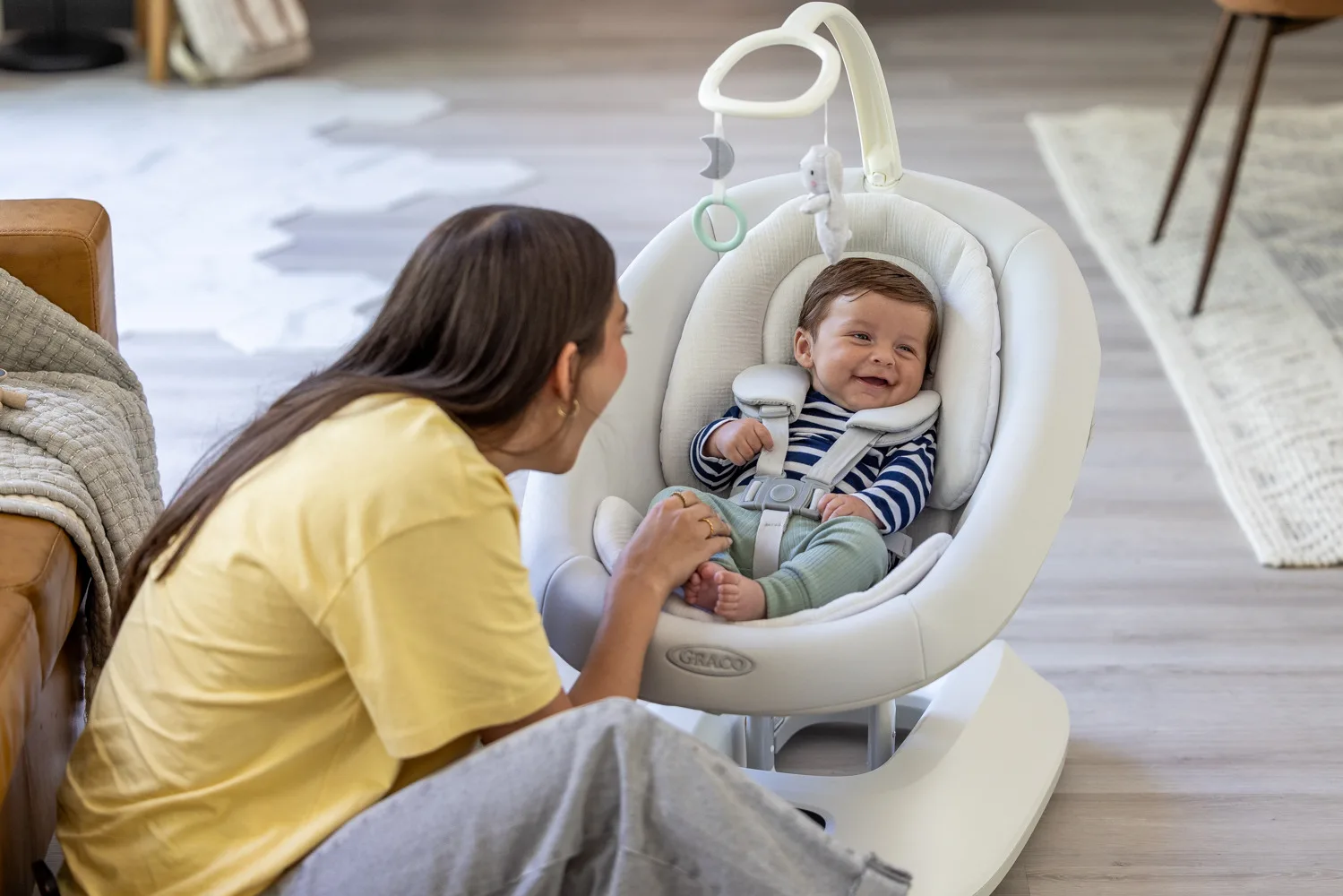
Bonfire Night used to be one night. Now it is roughly three weeks of whizzes, bangs and car alarms, starting somewhere in mid-October and finishing whenever the neighbour runs out of rockets. Add Diwali and New Year's Eve and a baby born this autumn is in for a noisy first winter.
None of that means you have to hide indoors with the curtains drawn until January. It just helps to have a plan: whether to go to a display at all, how to dress a baby for a cold night out, what to do when the bangs start at bedtime, and the one bit of first aid every parent should know before anyone lights anything.
First question: do you need to go at all?
Here's the thing: a baby won't remember it. Your first Bonfire Night as a family can be a sparkler-free one, watched through the living room window with a cup of tea, and nobody will report you. If you do fancy going, these tend to make life easier:
- Pick an early display. Plenty of organised displays start around 6pm or 7pm, which gives you a shot at being home before the bedtime meltdown.
- Choose an organised display over a garden one. There is a proper safety distance, someone in charge, and you are not relying on Uncle Steve and a milk bottle.
- Stand at the back. Further away means quieter, easier to escape and much less jostling with a pram or a sling.
- Have an exit strategy. If your baby hates it, leave. Ten minutes of fireworks counts. You went. Well done.
Protecting little ears
Fireworks are loud, and babies can't exactly tell you it's too much. The NHS page on hearing loss advises wearing ear protection when you're exposed to loud noises, and points out that hearing loss can be harder to spot in babies.
In practice, that means distance is your friend, and baby ear defenders are worth considering if you are going to a big display. Check they are made for babies and the right size, and go with your baby's cues: if they're startled, crying or turning away, that's your sign to head for the car.
Ten minutes of fireworks counts. You went. Well done.
Dressing for a cold night out (and coming home again)
Layers beat one enormous snowsuit. November evenings are properly cold, so a hat, mittens and a few thin layers under a warm outer layer will keep them cosy outside. The tricky bit is coming back in.
The Lullaby Trust's cold weather advice is to take off hats or hoods when your baby is indoors or in a car so they don't get too hot, and to remove outdoor clothes when they're sleeping indoors. Their hands and feet will always feel cold, so check their chest or the back of their neck instead. If they're sweaty or clammy, they're too hot, so take off a layer.
That goes double if your baby nods off in the pram on the way home. It is very tempting to leave a sleeping baby exactly as they are. Unzip the layers anyway. The Lullaby Trust recommends a room temperature of 16 to 20°C for babies, with no hats indoors.
If you need a refresher on the basics, our guide on how to dress a newborn for autumn covers layers, TOG and the dreaded hand-feel test.
When the bangs start at bedtime
You can't control the neighbours. You can control most of the rest. A few things that help on the noisiest nights:
- Keep the routine as normal as possible. Same bath, same feed, same song. Familiar is calming, even when the sky isn't.
- Close windows and curtains early. It muffles the noise and the flashes, and stops the room lighting up like a disco at 9.45pm.
- Some steady background sound may help. A fan or soft music can take the edge off sudden bangs. Keep anything that plugs in well away from the cot.
- Comfort them, then settle them back down. A startled baby wants you. Pick them up, cuddle, feed if that's what works, then put them back down on their back in their own cot.
If a firework wakes them at 3am and nothing seems to settle them, our list of six things to check when your baby is crying at 3am is a good place to start.
If you end up bringing them into your bed
At 11pm, when the fourth round of rockets goes off, the easiest option can feel like scooping your baby into your bed. Lots of parents do. If there's any chance you'll fall asleep with them, the Lullaby Trust's co-sleeping guidance is worth knowing before the night arrives:
- Sleep your baby on their back, on a firm, flat mattress, in a clear space.
- Keep pillows and adult bedding away from your baby.
- Don't bed-share if you or anyone in the bed has drunk alcohol or smokes. Bonfire Night mulled wine counts.
- Never fall asleep with your baby on a sofa or armchair. The Lullaby Trust says this significantly increases the risk of SIDS. If you're exhausted and feeding on the sofa, move to the bed or put the baby down first.
Sparklers, bonfires and the first aid to know
Sparklers and babies don't mix. A sparkler is a firework, it stays hot long after it goes out, and babies and toddlers grab things. If older siblings are having one, hold the baby well back, and have a bucket of water ready for the used ones.
If anyone does get burned, the NHS advice on burns and scalds is:
- Hold the burn under cool running water for 20 minutes, as soon as you can.
- Remove clothing or jewellery near the burn, but don't remove anything stuck to it.
- Once it has cooled, lay cling film over it. Don't wrap it around.
- Don't use creams, oils or butter, don't use plasters, and don't burst any blisters.
Call 111 for advice if a child under 5 has a burn. Call 999 or go to A&E if a burn is large or deep, or is on the face, genitals or bottom.
The bit that matters
Your baby's first Bonfire Night doesn't need to be magical. It needs to be warm, not too loud, and ideally over by bedtime. If that means watching from the bedroom window in your dressing gown with a baby who sleeps through the whole thing, that's a win. Next year they will want to hold a sparkler. Enjoy this one while it's quiet(ish).
Winter's coming with a few other firsts too: here's what's normal with your baby's first cold.
This article is general information based on NHS and Lullaby Trust guidance, not medical advice. If you're worried about your baby, trust your instincts and call NHS 111, your GP, or 999 in an emergency.
If you’re trying to conceive (TTC), you probably know that there are certain foods and nutrients that become especially important once you’re pregnant. But nutrition plays a vital role even when trying to conceive, much like laying a strong foundation before constructing a house.
Certain nutrients create that foundation by supporting egg and sperm health (yes, nutrition matters for both partners), hormone balance and creating a hospitable environment for a fertilized egg to implant. In fact, studies show that certain nutrients can help increase fertility and improve success rates for both natural conception and fertility treatments.
In other words, nutrition is a key player in the TTC journey, but getting the right nutrients in the right quantities can be tricky. That’s where supplements come in. Just as you’d take a multivitamin to fill in nutritional gaps for optimal health, fertility supplements can give you that extra nutrient boost.
Choosing supplements for your fertility journey
When choosing a supplement to support your fertility journey, look for science-backed, high-quality ingredients. Our editors are careful to select and partner with brands that use ingredients that have been clinically studied to support fertility. Eu Natural® (pronounced you) covers all those bases and more. We love knowing that Eu Natural® products contain zero artificial additives, binders, or fillers and are lab-tested to ensure purity and potency.

When choosing a supplement to support your fertility journey, look for science-backed, high-quality ingredients. Our editors are careful to select and partner with brands that use ingredients that have been clinically studied to support fertility. Eu Natural® (pronounced you) covers all those bases and more. We love knowing that Eu Natural® products contain zero artificial additives, binders, or fillers and are lab-tested to ensure purity and potency.