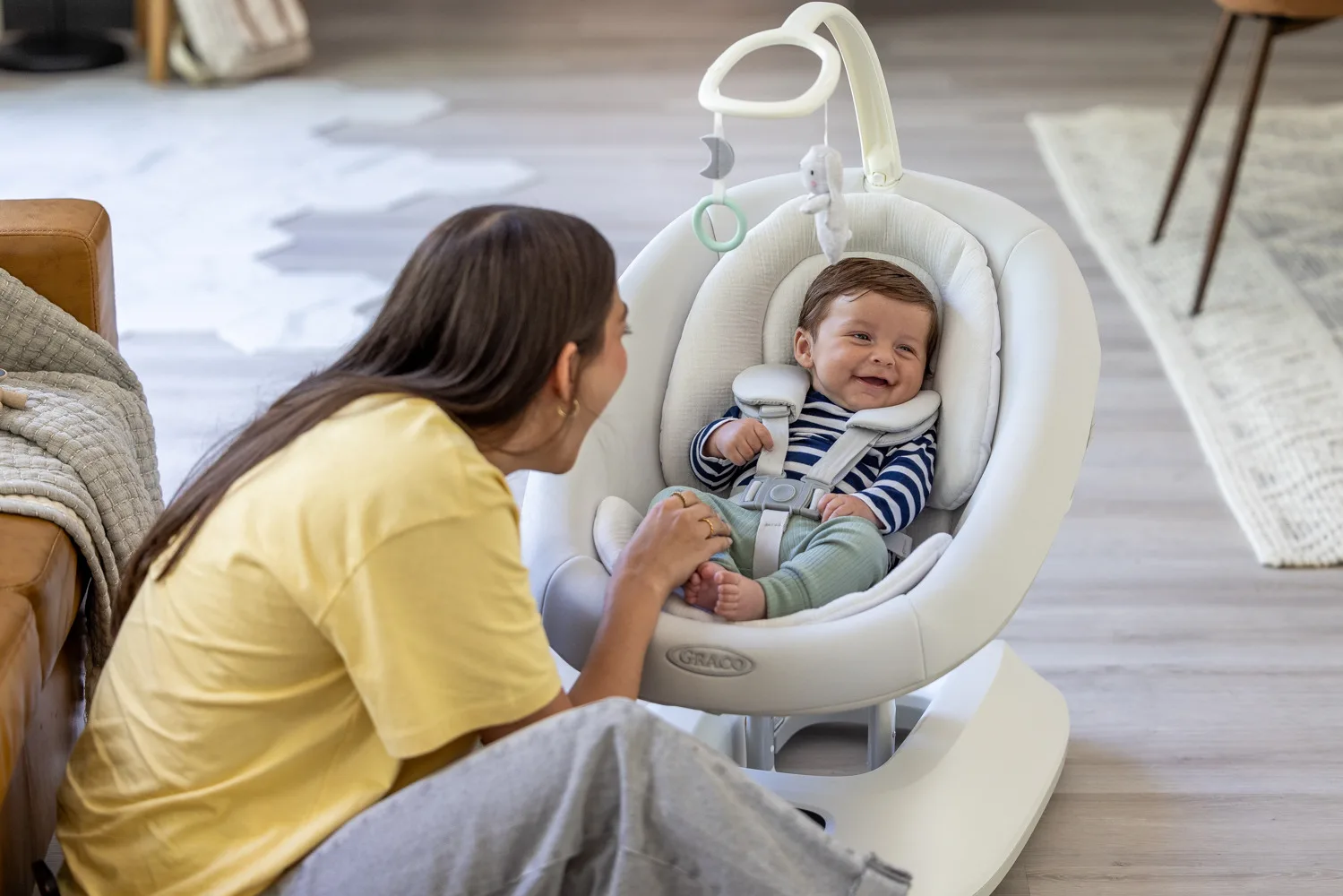
At some point in the first year, you will press the back of your hand to your baby's forehead, frown, and wonder whether they feel hotter than usual. Probably at 3am. Probably while googling with the other thumb.
A high temperature in a baby is common. It's usually a sign their body is fighting off an infection, and most of the time it can be looked after at home. But in very young babies the rules are stricter, and knowing the numbers before you need them makes the 3am version of you a lot calmer. Here's how to check your baby's temperature properly, what counts as a fever, how to look after them, and when to get help, all from NHS and Lullaby Trust guidance.
What's a normal temperature for a baby?
The NHS guide to taking your baby's temperature puts a normal temperature at about 36.4C, though it varies a little from baby to baby. A high temperature, or fever, is generally 38C or above.
Your hand is a clue, not a reading. Signs your baby might have a temperature include feeling hotter than usual on their back or chest, being sweaty or clammy, and having flushed cheeks. Hands and feet are often cooler than the rest of them, which is normal, so feel the chest or the back of the neck instead (the Lullaby Trust suggests the same check for overheating). If something feels off, get the thermometer out.
Which thermometer to buy
- A digital thermometer, used under the arm. The NHS says a digital thermometer is the best choice for a quick, accurate reading, and for children under 5 the armpit is the place to use it. Pharmacies and most big supermarkets sell them.
- Ear thermometers are quick but pricey, and can give misleading readings if they aren't positioned correctly, which is more likely with a baby's tiny ear canals.
- Forehead strip thermometers measure skin temperature rather than body temperature, so the NHS doesn't count them as accurate.
- Old mercury glass thermometers should never be used. They can break and release poisonous mercury. If there's one lurking in a grandparent's bathroom cabinet, it has earned its retirement.
How to take your baby's temperature
Hold your baby comfortably on your knee and tuck the thermometer into their armpit. Gently but firmly keep their arm against their body for as long as the instructions say, usually around 15 seconds (lots of thermometers beep when they're done), then read the display.
Some things skew the number. Being wrapped up tightly, a very warm room, lots of wriggling, a hot water bottle, heavy clothing or a recent bath can all affect the reading. Let your baby cool down for a few minutes, without letting them get cold or shivery, then check again.
Why your baby's age matters so much
This is the bit worth screenshotting. The NHS page on high temperature in children says to call 111 or ask for an urgent GP appointment if:
- your baby is under 3 months and has a temperature of 38C or higher, or you think they have a high temperature
- your baby is 3 to 6 months and has a temperature of 39C or higher, or you think they have a high temperature
- they have other signs of illness alongside the temperature, such as a rash
- the high temperature has lasted 5 days or more
- they aren't feeding or aren't acting like themselves, and you're worried
- they show signs of dehydration, such as fewer wet nappies, sunken eyes or no tears when crying
Under 3 months, 38C isn't a wait-and-see number. It's a call-111 number.
When to call 999 or go to A&E
The NHS says to call 999 or go to A&E if your baby has a high temperature and they:
- have a stiff neck, or a rash that doesn't fade when you press a glass against it
- seem bothered by light
- have a fit (a febrile seizure) for the first time
- have unusually cold hands and feet
- have skin that has changed colour, or blue, grey or pale lips or tongue
- are drowsy and hard to wake
- are extremely agitated and won't settle, or seem confused
- are finding it hard to breathe, are grunting, or are breathing fast
- aren't responding normally, or aren't interested in feeding
Looking after a baby with a temperature at home
Most babies with a high temperature can be looked after at home, and the NHS says it usually comes down within 1 to 4 days.
- Keep the feeds coming. Offer plenty of fluids, and if you're breastfeeding, keep going and offer feeds more often.
- Don't bundle them up. The NHS says not to overdress a child with a temperature or pile on blankets, and the Lullaby Trust says not to be tempted to wrap an unwell baby up more than usual. Dress them for the room you're in.
- Don't strip them off or sponge them down either. A high temperature is a natural response to infection, and the NHS advises against both.
- Check on them regularly, including overnight, and keep an eye out for signs of dehydration.
Paracetamol and ibuprofen: the age rules
Medicine is for when your baby is distressed or uncomfortable, not just to chase a number down. The NHS rules for young babies are specific, so it helps to know them before the pharmacy shuts:
- No paracetamol under 2 months. From 2 to 3 months, the NHS page on paracetamol for children says babies can have infant paracetamol if they weigh over 4kg and were born after 37 weeks. Babies this age can also have up to 3 doses after their MenB vaccinations to help prevent a high temperature (our guide to your baby's first jabs has more on that).
- No ibuprofen under 3 months, or for babies under 5kg. The NHS also says not to give it to a child with chickenpox or who is dehydrated, or to a child with asthma unless a doctor recommends it.
- Don't alternate the two unless a health professional tells you to, and never give aspirin to anyone under 16.
- Check the packet every time. Doses depend on age, so use the syringe that comes with the bottle, and ask a pharmacist, GP or health visitor if you're unsure, or if your baby was born early.
The bit to remember
You know your baby better than any thermometer does. If they seem unwell in a way you can't quite put your finger on, get advice, whatever the number says. Calling 111 about a hot, grumpy, off-their-feed baby is exactly what it's there for.
Temperatures often arrive with a runny nose: here's what's normal with your baby's first cold, what to know about RSV this winter, and how to dress a newborn for autumn without overdoing the layers.
This article is general information based on NHS and Lullaby Trust guidance, not medical advice. If you're worried about your baby, trust your instincts and call NHS 111, your GP, or 999 in an emergency.
If you’re trying to conceive (TTC), you probably know that there are certain foods and nutrients that become especially important once you’re pregnant. But nutrition plays a vital role even when trying to conceive, much like laying a strong foundation before constructing a house.
Certain nutrients create that foundation by supporting egg and sperm health (yes, nutrition matters for both partners), hormone balance and creating a hospitable environment for a fertilized egg to implant. In fact, studies show that certain nutrients can help increase fertility and improve success rates for both natural conception and fertility treatments.
In other words, nutrition is a key player in the TTC journey, but getting the right nutrients in the right quantities can be tricky. That’s where supplements come in. Just as you’d take a multivitamin to fill in nutritional gaps for optimal health, fertility supplements can give you that extra nutrient boost.
Choosing supplements for your fertility journey
When choosing a supplement to support your fertility journey, look for science-backed, high-quality ingredients. Our editors are careful to select and partner with brands that use ingredients that have been clinically studied to support fertility. Eu Natural® (pronounced you) covers all those bases and more. We love knowing that Eu Natural® products contain zero artificial additives, binders, or fillers and are lab-tested to ensure purity and potency.

When choosing a supplement to support your fertility journey, look for science-backed, high-quality ingredients. Our editors are careful to select and partner with brands that use ingredients that have been clinically studied to support fertility. Eu Natural® (pronounced you) covers all those bases and more. We love knowing that Eu Natural® products contain zero artificial additives, binders, or fillers and are lab-tested to ensure purity and potency.