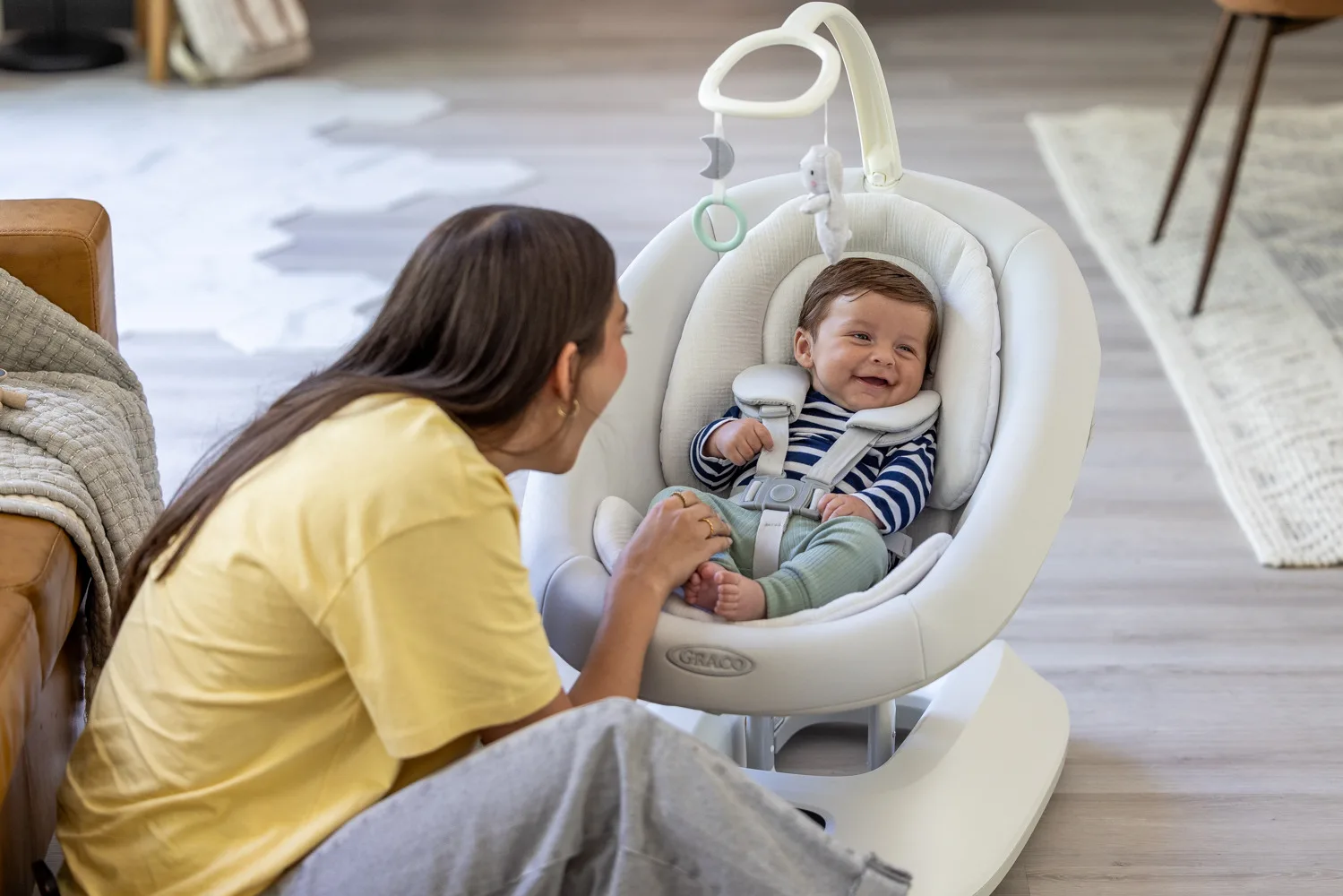
The nights are drawing in, the baby is tiny, and someone at the school gate has just sneezed directly into the autumn air. Flu season is here, and with a new baby in the house it is natural to want a plan that is slightly more robust than "hope".
Babies can't have the flu vaccine themselves until they are older, so protecting them this winter is mostly about the people around them. Here is who in your household can get a free NHS flu vaccine, how flu shows up in babies and children, and when to stop googling and call 111.
Why flu matters more with a baby in the house
Flu arrives fast. The NHS page on flu lists a sudden high temperature, an aching body, tiredness, a dry cough, a sore throat, a headache, trouble sleeping and loss of appetite. In children the symptoms are similar but can also include ear pain, sore eyes and swollen glands, and they may seem less active than usual.
It also spreads easily. The NHS says germs from coughs and sneezes can live on hands and surfaces for 24 hours, and people are most likely to pass flu on in the first 5 days. For a household that runs on shared muslins and a baby passed from lap to lap, that is worth knowing.
Can my baby have the flu vaccine?
Not yet. The NHS children's flu vaccine is only offered from 6 months, and then only to children with certain long-term health conditions, such as some breathing, heart, kidney or liver conditions, or a weakened immune system. Most children are offered it from age 2.
If you had the jab in pregnancy, your baby has a head start. The NHS page on the flu jab in pregnancy says babies get some protection from a vaccinated mother, which lasts for the first few months after birth, when they are particularly at risk from flu. It is also safe to breastfeed if you had the vaccine while pregnant.
If you are still pregnant (perhaps with a toddler already in tow, in which case, respect), the NHS says the vaccine is safe at any stage of pregnancy and it is best to have it as soon as you can, especially if you are near your due date.
Under 6 months, your baby's flu plan is mostly everyone else's flu plan.
Who else in your house can get a free flu vaccine
The NHS flu vaccine is free for a long list of people this winter. These are the groups most likely to apply to a house with a new baby in it:
- Older siblings aged 2 or 3. Children aged 2 or 3 on 31 August 2026 (born between 1 September 2022 and 31 August 2024) can have it. You can book through your GP, online or at a pharmacy, and you don't need to wait for an invitation.
- School-age children. Reception to year 11, plus 4-year-olds who haven't started school yet. Most school-age children have it at school during the autumn term.
- Anyone who is pregnant, at any stage.
- Adults with certain health conditions, including some breathing, heart, kidney and liver conditions, diabetes and a weakened immune system, plus anyone aged 65 or over. Handy to know if a grandparent is on regular babysitting duty.
- Carers, and people who live with someone who has a weakened immune system.
New parents aren't on the list as a group, so if none of these apply to you and you're not sure, ask your GP surgery. You can book online, in the NHS App, at a pharmacy that offers the free vaccine or through your GP. The last date for this season is 31 March 2027, but the NHS advice is to have it as soon as you can.
The nasal spray, demystified
Most children have the vaccine as a quick, painless nasal spray up each nostril. No needle, no bribery required (well, less). Children who can't have the spray, including those under 2, are offered an injection instead.
The NHS says side effects are usually mild and pass in a day or two: a blocked or runny nose, tiredness, a headache or going off their food. The vaccine can't give your child flu, and it can take up to 14 days to start working.
One thing some families want to know: the nasal spray contains a small amount of pork gelatine. A gelatine-free injection is available if you ask the person vaccinating your child, or you can request it on the school consent form.
Keeping germs away from the baby (without the clingfilm)
- Hands, hands, hands. Wash often with warm water and soap, especially before picking up the baby.
- Catch it, bin it. Coughs and sneezes go into a tissue, and the tissue goes straight in the bin.
- Ill visitors can wave from the doorstep. The NHS advice is to stay at home and avoid other people if you have a high temperature or don't feel well enough for normal activities. That includes the relative who insists it's "just a sniffle".
If your baby gets ill: when to call 111
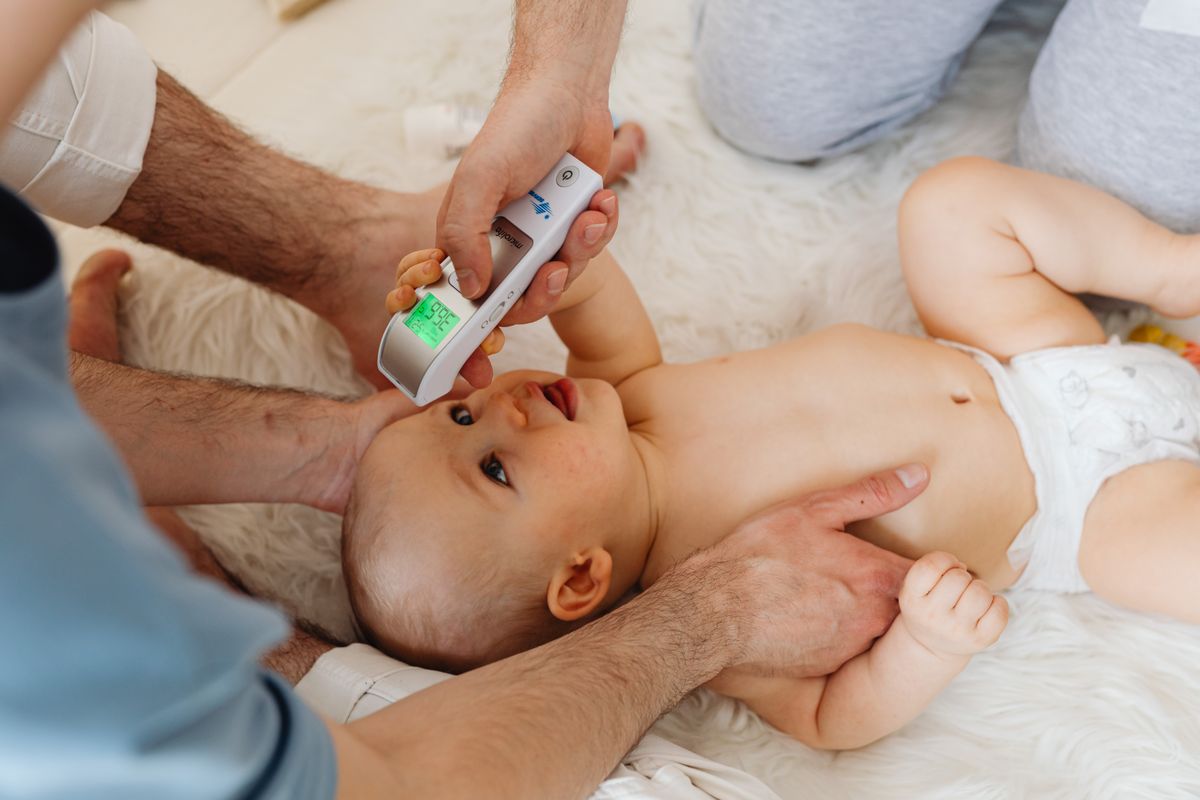
A high temperature is 38C or more. The NHS guide to high temperature in children says to call 111 if your baby:
- is under 3 months old and has a temperature of 38C or higher
- is 3 to 6 months old and has a temperature of 39C or higher
- has a high temperature and other signs of illness, such as a rash
- has had a high temperature for 5 days or more
- is not feeding or not acting like their usual self, and you're worried
- seems dehydrated, for example nappies that are not very wet, sunken eyes or no tears when crying
Call 999 if your baby has a stiff neck, a rash that doesn't fade when you press a glass against it, a fit, blue, grey or unusually pale skin, lips or tongue, is drowsy and hard to wake, or is having difficulty breathing or breathing very fast.
At home, keep feeds going (if you're breastfeeding, carry on as normal), don't wrap them in too many layers, and don't undress them or sponge them down. Paracetamol isn't suitable for babies under 2 months, and ibuprofen isn't suitable for babies under 3 months or under 5kg, so check with a pharmacist before giving a young baby anything.
More winter reading
For sniffles that aren't flu, our guide to your baby's first cold covers what's normal and what helps, and our RSV explainer deals with the other big winter bug for babies. If routine vaccinations are coming up, here is what happens at 8, 12 and 16 weeks, and if you're stuck on layers, how to dress a newborn for autumn.
This article is general information based on NHS guidance, not medical advice. Eligibility details are for the 2026 to 2027 flu season in England and may differ in Scotland, Wales and Northern Ireland. If you're worried about your baby, trust your instincts and call NHS 111, your GP, or 999 in an emergency.
If you’re trying to conceive (TTC), you probably know that there are certain foods and nutrients that become especially important once you’re pregnant. But nutrition plays a vital role even when trying to conceive, much like laying a strong foundation before constructing a house.
Certain nutrients create that foundation by supporting egg and sperm health (yes, nutrition matters for both partners), hormone balance and creating a hospitable environment for a fertilized egg to implant. In fact, studies show that certain nutrients can help increase fertility and improve success rates for both natural conception and fertility treatments.
In other words, nutrition is a key player in the TTC journey, but getting the right nutrients in the right quantities can be tricky. That’s where supplements come in. Just as you’d take a multivitamin to fill in nutritional gaps for optimal health, fertility supplements can give you that extra nutrient boost.
Choosing supplements for your fertility journey
When choosing a supplement to support your fertility journey, look for science-backed, high-quality ingredients. Our editors are careful to select and partner with brands that use ingredients that have been clinically studied to support fertility. Eu Natural® (pronounced you) covers all those bases and more. We love knowing that Eu Natural® products contain zero artificial additives, binders, or fillers and are lab-tested to ensure purity and potency.

When choosing a supplement to support your fertility journey, look for science-backed, high-quality ingredients. Our editors are careful to select and partner with brands that use ingredients that have been clinically studied to support fertility. Eu Natural® (pronounced you) covers all those bases and more. We love knowing that Eu Natural® products contain zero artificial additives, binders, or fillers and are lab-tested to ensure purity and potency.