Baby health · Newborn
Your baby's first cold: what's normal, what helps and when to call 111
Snuffles, a stuffy nose and a baby who suddenly finds feeding hard work. Here's what a cold looks like in the early months, the simple things that help, and the signs that mean it's time to get help.

It usually starts with a sniff. Then a sneeze, a crusty nose and a baby who wants to feed every twenty minutes but keeps pulling off in a huff. Welcome to cold season, where the washing pile grows, the muslins multiply and nobody in the house sleeps quite as well as they did last week.
If this is your baby's first cold, it can feel alarming. They're so small, and they can't tell you what hurts. The reassuring part: colds are incredibly common in babies, and most run their course at home with a bit of extra care. The useful part: knowing the handful of signs that mean a cold has become something more.
Why babies catch so many colds
Babies and young children catch a lot of colds, and that's normal. According to the NHS, children have 5 to 8 colds a year on average, and most colds in younger children get better within 2 weeks. The NHS common cold guidance adds that symptoms can last longer in babies and young children.
Autumn is prime time. Older siblings bring germs home from nursery and school, everyone spends more time indoors, and the baby classes you finally braved are full of other tiny noses. It's not a sign you've done anything wrong. Our guide to building immunity early covers the season in more detail.
What a cold looks like in a baby
The classic signs are a blocked or runny nose, sneezing and a cough, but babies show it in other ways too. The NHS says young children with a cold may be irritable, have difficulty feeding and sleeping, breathe through their mouth, and be sick after coughing.
The feeding part catches most parents out. A baby with a stuffy nose can find it tricky to feed and breathe comfortably at the same time, so feeds often become short, frequent and fussy. Offering little and often is completely fine.
What actually helps
Keep the milk coming. NHS advice for a poorly baby with a temperature is to give plenty of fluids and, if you're breastfeeding, to carry on breastfeeding as normal. Keep offering feeds, even if they're shorter than usual.
Try saline drops for a stuffy nose. The NHS says saline nose drops can help loosen dried snot and relieve a stuffy nose. A pharmacist can point you to ones suitable for babies. It won't be your baby's favourite moment, but it can make the next feed easier.
Know which medicines are, and aren't, for babies. The NHS is clear that children under 6 should not have over-the-counter cough and cold remedies, including decongestants, unless advised to by a GP or pharmacist. If your baby has a high temperature and seems distressed, paracetamol or ibuprofen can help, but NHS fever guidance says not to give paracetamol to a baby under 2 months, or ibuprofen to a baby under 3 months. Always check the dose on the pack for your baby's age, and ask a pharmacist if you're unsure.
Skip the well-meaning remedies. No honey before 12 months, no hot drinks, and no steam bowls, which the NHS warns against because of the risk of scalding.
"It's important not to feel tempted to wrap an unwell baby up more than usual." The Lullaby Trust
Sleep when they're snuffly
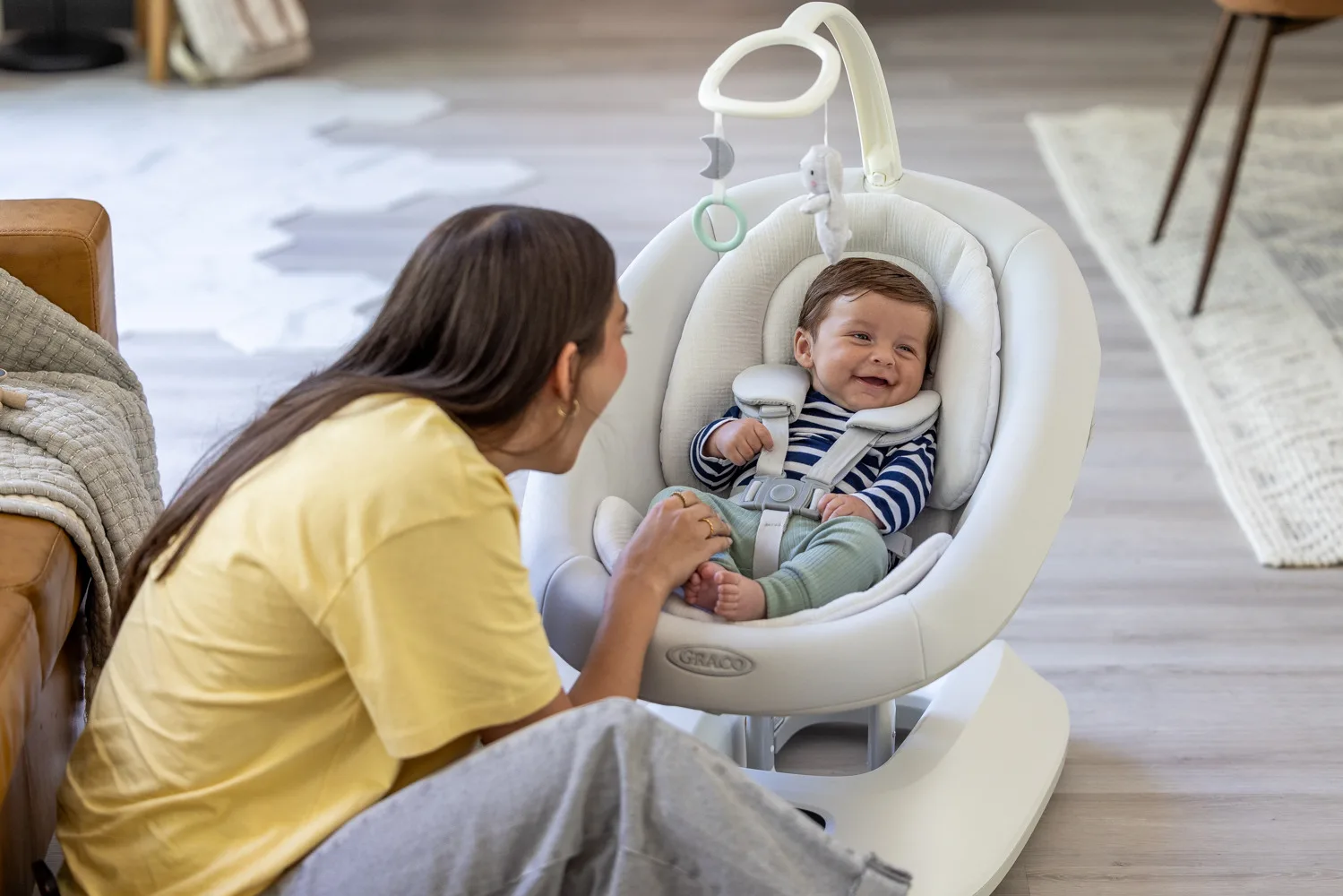
The instinct is to prop them up and bundle them up. Safer sleep advice says do neither. The Lullaby Trust advises always placing your baby on their back on a firm, flat mattress, and avoiding anything that keeps a baby in a seated or inclined position, such as bouncy chairs, swings and hammocks. If your baby dozes off somewhere inclined, move them to a firm, flat, clear space.
It's the same with layers. The Lullaby Trust's room temperature guidance notes that babies with a cold or fever may be warmer than usual, and recommends a room of 16 to 20°C. Feel their chest or the back of their neck: if it's hot or sweaty, take a layer off. Cool hands and feet on their own are normal. Our explainer on what TOG actually means helps with the sleeping bag maths.
And yes, expect a few rough nights. A snuffly baby wakes more. It passes, and so will this patch of broken sleep (you will sleep again, promise).
The temperature numbers worth knowing
Two numbers are worth saving in your phone. The NHS treats a temperature of 38°C or higher in a baby under 3 months, or 39°C or higher in a baby aged 3 to 6 months, as a reason to get urgent medical help. With a young baby, don't wait and see.
To check, place a digital thermometer inside the top of the armpit, gently close their arm over it and keep it pressed to their side. The NHS also advises against undressing your baby or sponging them down to cool them, and against covering them with too many clothes or bedclothes.
When to get help
Call 999 or go to A&E if your baby:
- is breathing very fast, has difficulty breathing, or is making grunting noises as they breathe
- has blue, grey, pale or blotchy skin, lips or tongue
- is floppy, difficult to wake or cannot be woken
- has a weak, high-pitched or continuous cry
- has a rash that does not fade when you press it
- has not had a pee in the past 12 hours
- has a very low temperature, less than 36°C
Call NHS 111 or your GP if you're worried about any of your baby's symptoms or don't know what to do. The NHS urgent help guide also lists a baby who is not feeding as a warning sign, so don't sit on that one. A temperature that lasts 5 days or more, or a cough that hangs around for more than 3 weeks, is worth getting checked too.
RSV, a common winter virus, can start out looking like an ordinary cold, so it's worth reading our guide to RSV and your baby for the signs to watch. And trust your gut. You know your baby better than anyone, and 111 is there for exactly this, including at 3am.
The part nobody mentions
A first cold is often harder on the parent than the baby. Lower the bar for a few days: extra cuddles, contact naps, toast for dinner, a sofa that looks like a muslin factory. The house will survive. So will you.
This article is general information based on NHS and Lullaby Trust guidance and doesn't replace advice from your midwife, health visitor, pharmacist or GP. If you're worried about your baby, call NHS 111, or 999 in an emergency.
If you’re trying to conceive (TTC), you probably know that there are certain foods and nutrients that become especially important once you’re pregnant. But nutrition plays a vital role even when trying to conceive, much like laying a strong foundation before constructing a house.
Certain nutrients create that foundation by supporting egg and sperm health (yes, nutrition matters for both partners), hormone balance and creating a hospitable environment for a fertilized egg to implant. In fact, studies show that certain nutrients can help increase fertility and improve success rates for both natural conception and fertility treatments.
In other words, nutrition is a key player in the TTC journey, but getting the right nutrients in the right quantities can be tricky. That’s where supplements come in. Just as you’d take a multivitamin to fill in nutritional gaps for optimal health, fertility supplements can give you that extra nutrient boost.
Choosing supplements for your fertility journey
When choosing a supplement to support your fertility journey, look for science-backed, high-quality ingredients. Our editors are careful to select and partner with brands that use ingredients that have been clinically studied to support fertility. Eu Natural® (pronounced you) covers all those bases and more. We love knowing that Eu Natural® products contain zero artificial additives, binders, or fillers and are lab-tested to ensure purity and potency.

When choosing a supplement to support your fertility journey, look for science-backed, high-quality ingredients. Our editors are careful to select and partner with brands that use ingredients that have been clinically studied to support fertility. Eu Natural® (pronounced you) covers all those bases and more. We love knowing that Eu Natural® products contain zero artificial additives, binders, or fillers and are lab-tested to ensure purity and potency.

.png)



.png)