AD · In partnership with Ergobaby
There is a stretch of the early weeks where your baby will sleep beautifully, as long as they are on you. Put them down and the eyes open. Pick them up and they settle. It is not a habit you have accidentally taught them, it is simply what a newborn is built to want.
A carrier is the thing that makes that liveable. It gives your baby what they are asking for and gives you your hands back, and for the first few months the carrier you want is one designed for a brand new baby rather than one you have to adapt.
Why a newborn carrier is a different thing
Most structured carriers are built to grow with your child, which is useful later and awkward at the start. A newborn has very little head and neck control and needs their back supported in a soft curve, their airway clear, and their hips held in the gentle frog shape that lets the joint develop properly. A carrier sized for a toddler does none of that on its own, which is why so many of them need an infant insert, which is one more thing to buy, fit and worry about.
A newborn carrier starts from the opposite end. It is sized for the body that is actually in it.
What the Embrace is
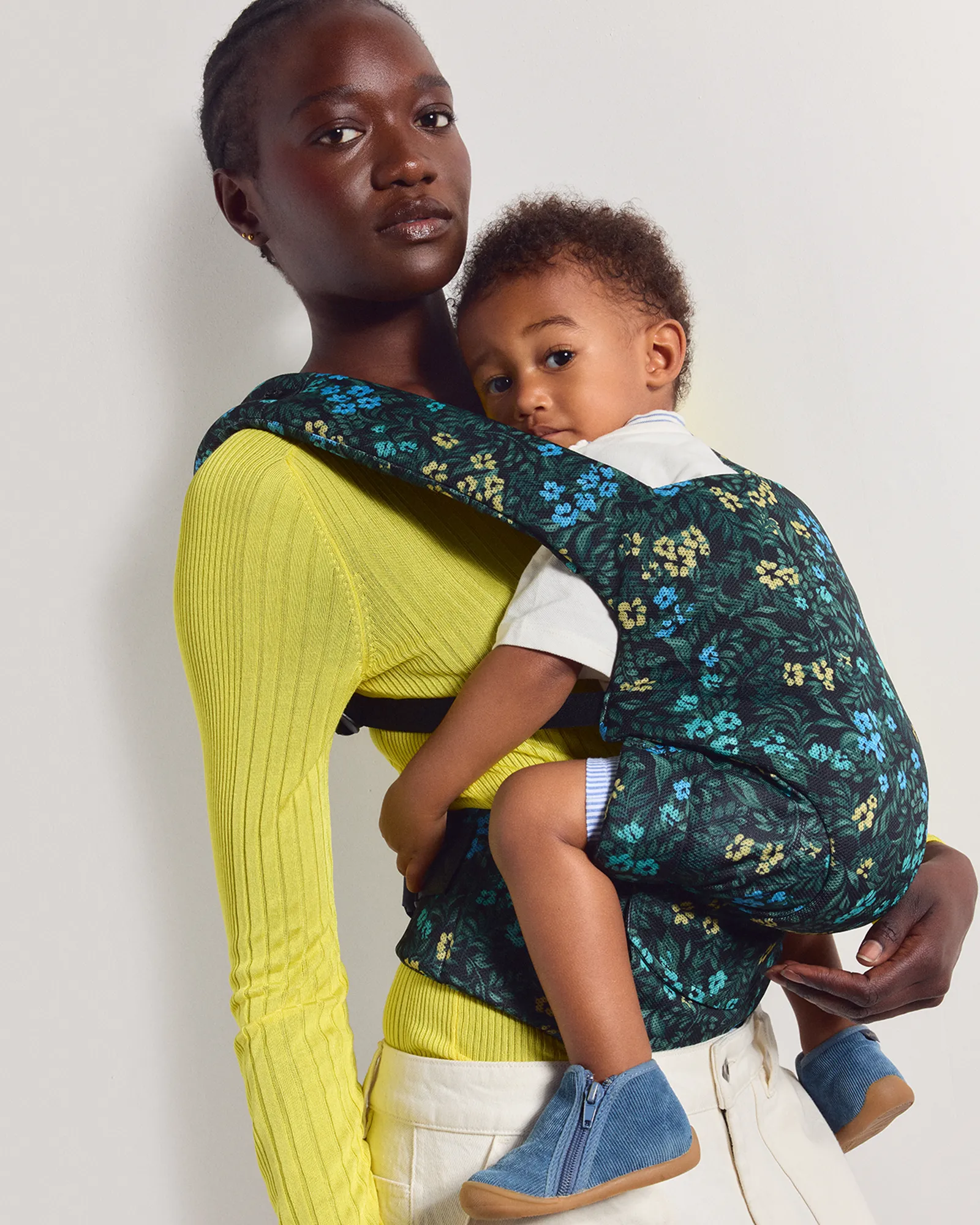
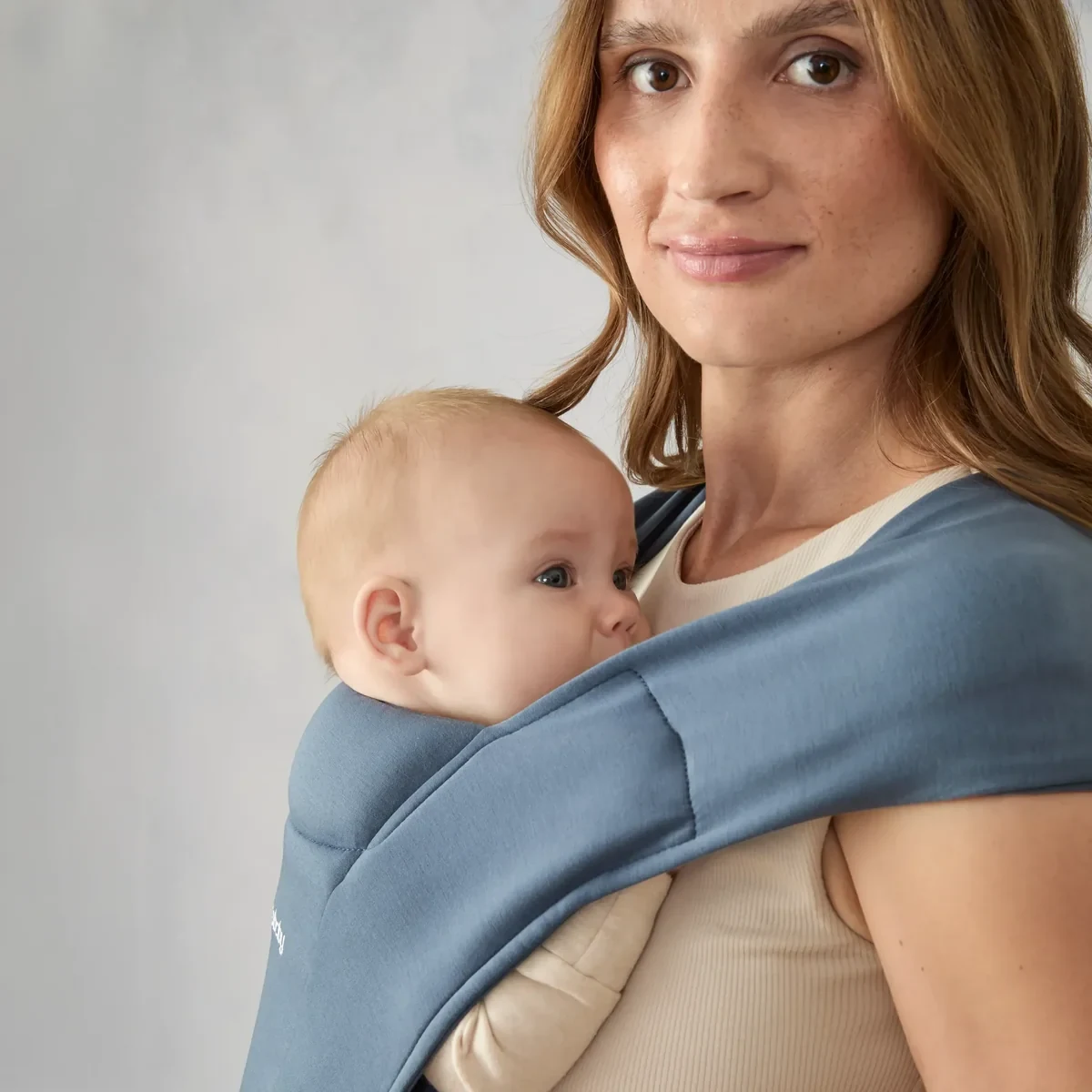
The Ergobaby Embrace is the one in the range built for the beginning. It is a soft knit carrier rather than a stiff structured one, so it has some of the feel of a wrap with none of the wrapping.
Why parents reach for the Embrace. Video: Ergobaby
It takes a baby from 3.2kg to 11.3kg, roughly birth to around twelve months, and it is newborn-ready with no insert. The seat adjusts so the fabric spans knee to knee at whatever size your baby is, which is what gives you the knees-higher-than-bottom position everyone talks about. There is padded support behind the head and neck for the weeks when that is doing all the work.
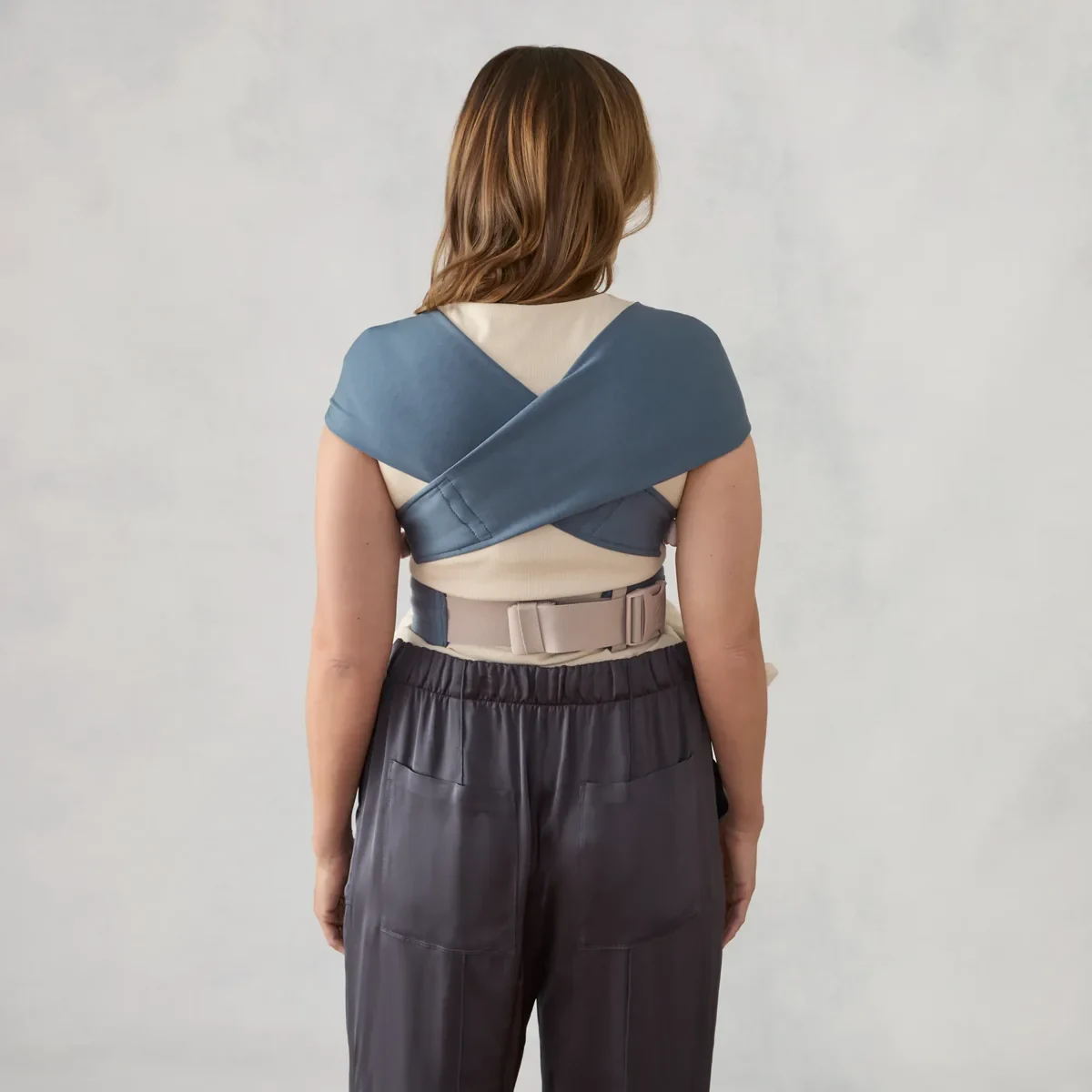
The straps cross over at the back rather than clipping across your chest, which spreads the weight over both shoulders and is kinder on your back than it sounds. They are also designed to spread out rather than dig in.
Getting it on
This is the part that sells it. It goes on like a top: you slip it over your head, then there are three clicks and you are done. No tying, no long tail of fabric trailing on the floor of a car park, no second adult required.
The sequence is the same every time. Put the carrier on yourself first with the waistband snug and level. Hold your baby high against your chest with one hand. Bring the panel up their back with the other. Fasten, then tighten a little at a time, alternating sides, until there is no slack anywhere.
Putting the Embrace on, step by step. Video: Ergobaby
It is also cut to fit a wide range of bodies, from petite through to 4XL, which matters more than brands usually admit. A carrier that does not fit the wearer will never fit the baby properly either.
If you’re trying to conceive (TTC), you probably know that there are certain foods and nutrients that become especially important once you’re pregnant. But nutrition plays a vital role even when trying to conceive, much like laying a strong foundation before constructing a house.
Certain nutrients create that foundation by supporting egg and sperm health (yes, nutrition matters for both partners), hormone balance and creating a hospitable environment for a fertilized egg to implant. In fact, studies show that certain nutrients can help increase fertility and improve success rates for both natural conception and fertility treatments.
In other words, nutrition is a key player in the TTC journey, but getting the right nutrients in the right quantities can be tricky. That’s where supplements come in. Just as you’d take a multivitamin to fill in nutritional gaps for optimal health, fertility supplements can give you that extra nutrient boost.
Choosing supplements for your fertility journey
When choosing a supplement to support your fertility journey, look for science-backed, high-quality ingredients. Our editors are careful to select and partner with brands that use ingredients that have been clinically studied to support fertility. Eu Natural® (pronounced you) covers all those bases and more. We love knowing that Eu Natural® products contain zero artificial additives, binders, or fillers and are lab-tested to ensure purity and potency.

When choosing a supplement to support your fertility journey, look for science-backed, high-quality ingredients. Our editors are careful to select and partner with brands that use ingredients that have been clinically studied to support fertility. Eu Natural® (pronounced you) covers all those bases and more. We love knowing that Eu Natural® products contain zero artificial additives, binders, or fillers and are lab-tested to ensure purity and potency.

For over 20 years, Ergobaby has supported parents with beautifully designed, ergonomic baby gear that brings together comfort, practicality and everyday connection.