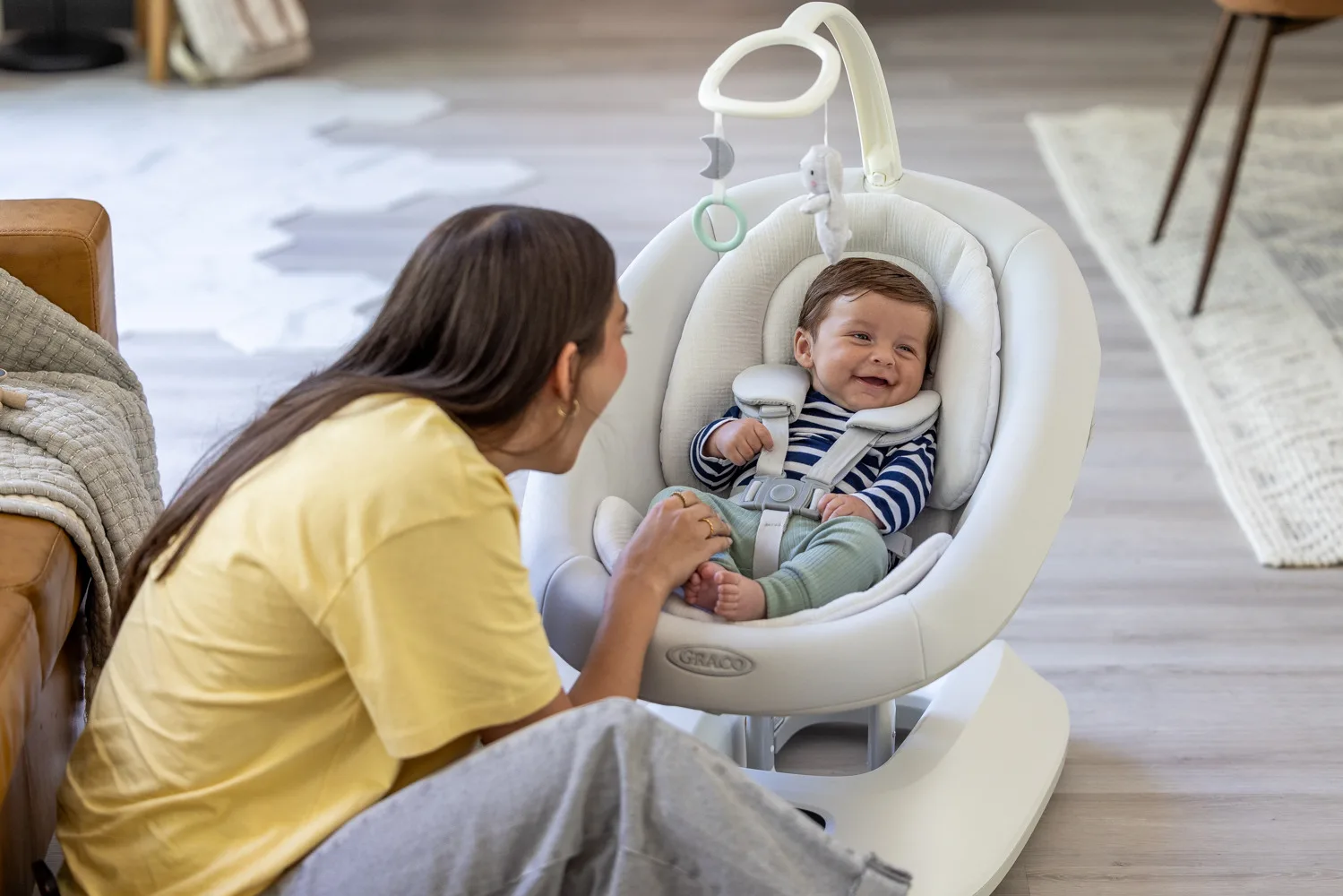
Baby · Development
Tummy time: how much, how often, and what to do if your baby hates it
Thirty minutes a day sounds simple until your baby faceplants into the playmat and protests. Here is what the NHS actually recommends, how to build up to it, and why lying on your chest absolutely counts.

Tummy time has a branding problem. It sounds like a gentle, giggly activity. In practice, for plenty of babies, it is two minutes of indignant grunting followed by a full face-down protest on the playmat. If that is your house, you are in very good company, and you are not doing it wrong.
It is worth persevering, though, because those short, cross little sessions are doing real work. Here is what tummy time is for, how much the NHS suggests, and some low-effort ways to make it less of a battle, especially now the weather has moved everyone indoors.
What tummy time is, and why it matters
Tummy time is simply time your baby spends on their front while they are awake and someone is watching. According to the NHS guide to keeping your baby active, it helps to build the muscles your baby needs for sitting and crawling. NHS Best Start in Life adds that it strengthens the back, neck and shoulders, as well as giving them a different view of the world. After weeks of staring at the ceiling, that view is quite the upgrade.
There is a second reason too. Babies should always sleep on their backs, which is exactly right, but a baby's skull is soft and can flatten where it rests against the mattress for long stretches. The NHS page on flat head syndrome suggests giving your baby plenty of time on their tummy while they are awake during the day, moving toys and mobiles around so they turn their head, and varying the side you feed and carry them on.
How much, and from when?
From birth. There is no need to wait for a certain age. The NHS says you can start tummy time from birth by lying your baby on your chest, as long as you are wide awake and unlikely to drop off yourself.
Little and often. The advice is to start small and gradually increase the time day by day. A minute or two after a nappy change counts. So does a short session on your chest while something forgettable plays on the telly.
The target to work towards. The NHS physical activity guidelines for under-fives suggest at least 30 minutes of tummy time spread throughout the day for babies who are not yet mobile. Spread is the important word. Nobody is expecting half an hour in one go from a three-week-old.
Thirty minutes is a goal for the whole day, not one heroic session. Ten lots of three minutes is a win.
The safety bits (short, but important)
- Awake and watched, always. The Lullaby Trust says to give babies some time to play on their tummy while they are awake, and to keep an eye on them while they do.
- Back to sleep, every sleep. The Lullaby Trust is clear that the safest way for a baby to sleep is on their back. If your baby gets drowsy during tummy time, move them onto their back in their own clear, flat sleep space.
- Not when you are about to nod off. Chest-to-chest tummy time is lovely, but only when you are alert. If your eyes are closing, put your baby down safely first.
- Pick your moment. Lots of parents find a very full tummy and tummy time are not friends, so a little while after a feed, when your baby is content and alert, often goes better.
What to do if your baby hates it
Plenty do, at first. NHS Best Start in Life suggests a few ways to make it easier, and we have added some sofa-tested extras.
Start on you. Your chest or lap is the easiest place to begin. They get to look at their favourite face while they work, and you get to sit down. Everyone wins.
Get down on their level. Lie on the floor facing them. Talk, sing, pull silly faces. You are the best toy in the room, whatever the toy shop says.
Try a rolled-up towel. A small rolled towel under their arms gives a little lift, which can make holding their head up feel like less hard work. Only while they are awake and watched, and tidy it away afterwards.
Put something interesting in reach. A toy, a board book propped open, a baby-safe mirror. Move it a little to one side, then the other, so they practise turning their head.
Stop before the meltdown. If they are getting cross, pick them up and try again later. Ending on a good note is far more useful than pushing through the wailing.
Make it part of the routine. A few minutes after every nappy change adds up surprisingly fast, and means one less thing to remember at 4pm.
Autumn indoor tummy time ideas
Now the park is mostly puddles, the living room floor is the new soft play.
- The warm spot. A blanket on the floor in the warmest room, well away from radiators and fires. Our guide to dressing a newborn for autumn covers layers if the heating is still a matter of household debate.
- The window view. Lie them facing a window, out of direct sun, to watch the rain, the leaves and next door's cat.
- The sibling show. If there is an older child at home, get them lying on the floor too. Big brothers and sisters make excellent, if unpredictable, entertainment.
- The mirror trick. A baby-safe floor mirror gives them a face to look at, even when yours is busy with a cold cup of tea.
When to ask for advice
All babies develop at their own pace. NHS Best Start in Life notes that babies usually start crawling at around 7 to 10 months, although not all babies crawl, and some shuffle around on their bottoms instead. If you are worried your baby is not showing any signs of moving by 12 months, ask your health visitor for advice.
The NHS also suggests seeing a GP if you are concerned about the shape or size of your baby's head, or if their head is always tilted to one side or they have difficulty turning it. Your health visitor is a good first port of call for any wobbles in between, and our round-up of newborn things that worry every new parent may settle a few nerves. For the long nights that come with all of this, there is always our honest baby sleep timeline.
The short version
- Tummy time is awake, supervised time on their front. Start from birth, on your chest.
- Little and often, building towards at least 30 minutes spread across the day.
- Always back to sleep, and never when you are drowsy yourself.
- If they hate it: start on you, get on the floor, try a rolled towel, stop before the tears.
- Ask your health visitor or GP if you have worries about movement or head shape.
This article is general information, not medical advice. Every baby is different. If you are worried about your baby's development, head shape or health, speak to your health visitor or GP, or call NHS 111.
If you’re trying to conceive (TTC), you probably know that there are certain foods and nutrients that become especially important once you’re pregnant. But nutrition plays a vital role even when trying to conceive, much like laying a strong foundation before constructing a house.
Certain nutrients create that foundation by supporting egg and sperm health (yes, nutrition matters for both partners), hormone balance and creating a hospitable environment for a fertilized egg to implant. In fact, studies show that certain nutrients can help increase fertility and improve success rates for both natural conception and fertility treatments.
In other words, nutrition is a key player in the TTC journey, but getting the right nutrients in the right quantities can be tricky. That’s where supplements come in. Just as you’d take a multivitamin to fill in nutritional gaps for optimal health, fertility supplements can give you that extra nutrient boost.
Choosing supplements for your fertility journey
When choosing a supplement to support your fertility journey, look for science-backed, high-quality ingredients. Our editors are careful to select and partner with brands that use ingredients that have been clinically studied to support fertility. Eu Natural® (pronounced you) covers all those bases and more. We love knowing that Eu Natural® products contain zero artificial additives, binders, or fillers and are lab-tested to ensure purity and potency.

When choosing a supplement to support your fertility journey, look for science-backed, high-quality ingredients. Our editors are careful to select and partner with brands that use ingredients that have been clinically studied to support fertility. Eu Natural® (pronounced you) covers all those bases and more. We love knowing that Eu Natural® products contain zero artificial additives, binders, or fillers and are lab-tested to ensure purity and potency.

.png)