



Gifted · Weaning · Finger foods
Finger foods and first snacks: where Pure Goat's veggie puffs fit in
From around 6 months, the high chair becomes a very small, very sticky restaurant. Here's what the NHS says about finger foods and snacks in the first year, plus a closer look at The Pure Goat Company's organic vegetable and legume puffs.
Weaning is a messy business. One minute it's all milk, the next they're eyeing up your toast like a tiny heist crew. NHS Best Start in Life says introducing solid foods starts when your baby is around 6 months old, and finger foods are a big part of the fun.
According to the NHS, offering finger foods at each meal is a good way to help your baby learn to self-feed. Think soft cooked vegetables such as carrot, broccoli, parsnip or butternut squash, and slices of soft fruit like peach, melon and banana. Some of it will end up in their hair. This is normal.
Do babies actually need snacks?
Short answer: not yet. The NHS is clear that babies under 12 months do not need snacks. If you think they're hungry between meals, offer extra milk feeds instead. Breast milk or first infant formula should be their main drink for the whole first year (NHS Best Start in Life).
So baby puffs aren't a must-have. They're a handy extra: something for the high chair tray alongside a meal, or the changing bag on a day out.
Babies under 12 months don't need snacks. Puffs are a nice-to-have, not a must-have.
Meet the puffs
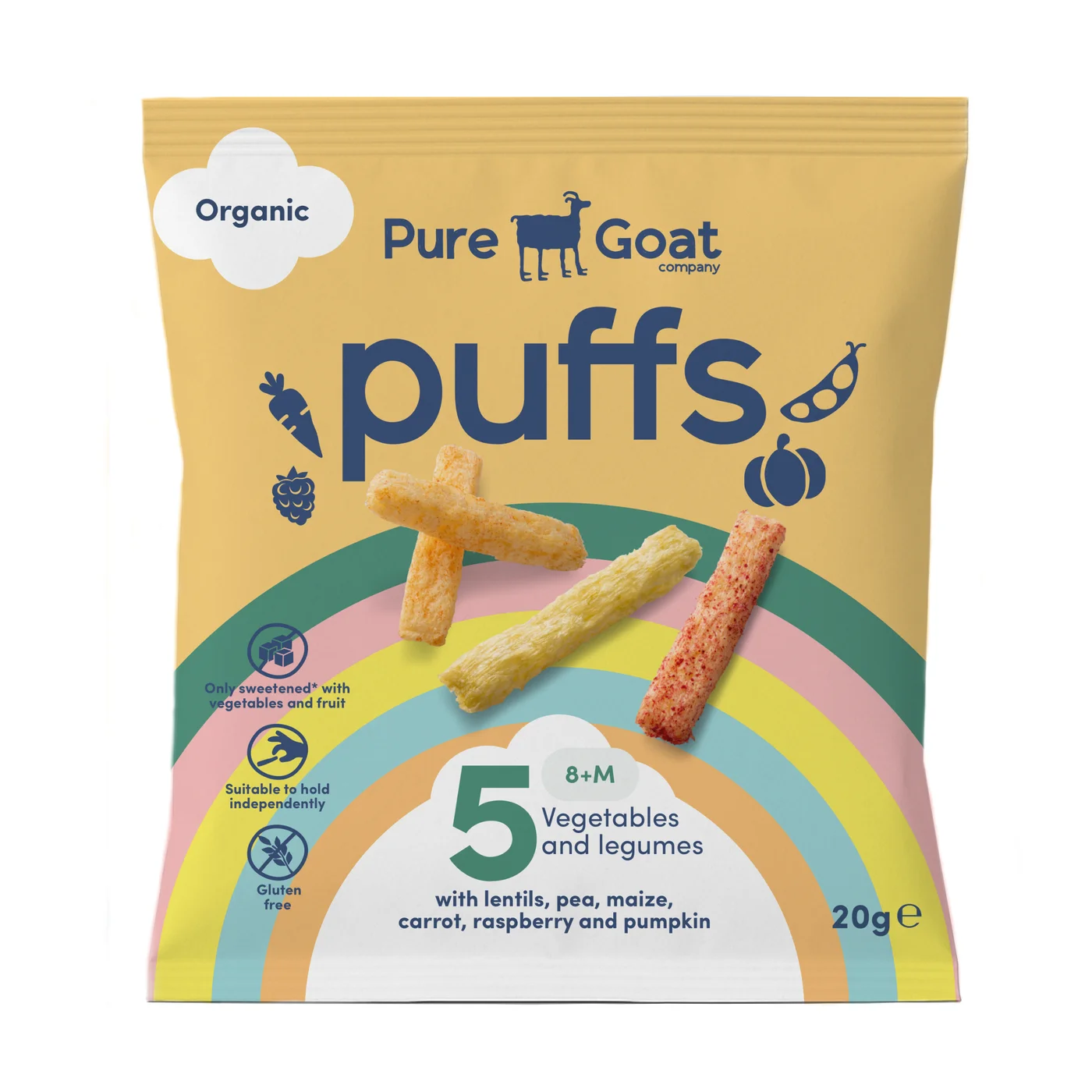
The Pure Goat Company is best known for goat's milk formula, but there's no milk in the ingredients list for its Bio Puffs 5 vegetables and legumes. According to the brand, they're made from corn (40.5%), red lentils (27.6%) and green peas (19.4%), with olive oil, dried carrot, dried raspberry, dried pumpkin and vitamin B1.
The brand says the puffs are certified organic and gluten-free, with no added sugars or salt (they contain naturally occurring sugars and salt). They're free from colourings, preservatives and artificial flavourings, and designed to be easy for little hands to hold.
One thing to note: Pure Goat says the puffs are suitable from 8 months, not 6. If you've only just started weaning, they're one for later. The brand's own advice is to make sure your child is sitting upright and to stay nearby while they eat.
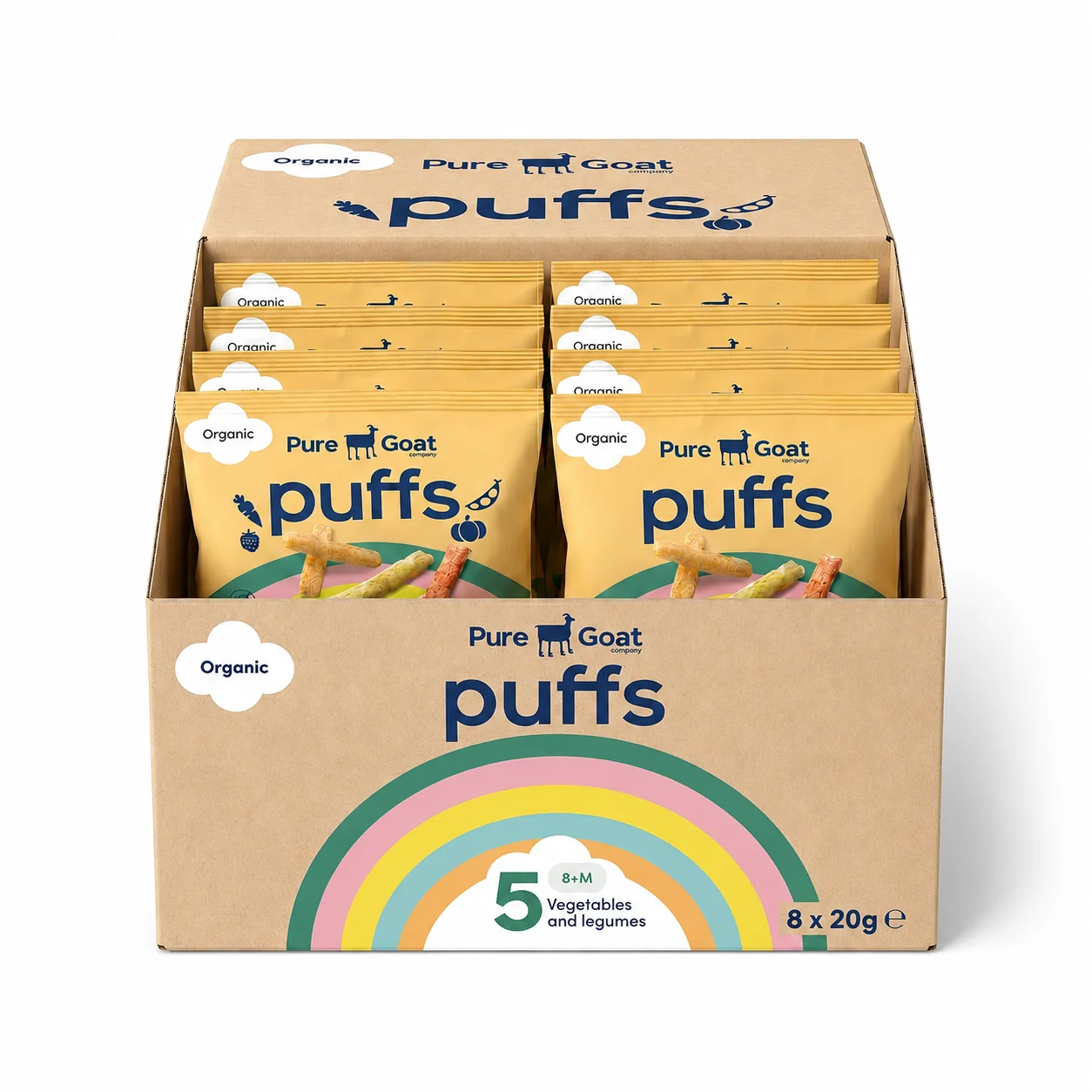
01 · The one we're testing
Pure Goat Bio Puffs 5 vegetables and legumes
Lentil, pea and corn puffs with carrot, pumpkin and raspberry. Organic, with no added sugars or salt, says the brand.
Value pack of 8 x 20g bags (160g) · From 8 months · Gluten-free, palm oil-free, soy-free
£10.50 · The Pure Goat Company
Shop the puffsWhere the goat's milk comes in
The goat part of the name comes from the brand's formula range, made with organic whole goat's milk. The NHS guide to types of formula says goats' milk formula is produced to the same nutritional standards as cows' milk-based formula, but it is not less likely to cause allergies, and it is not suitable for babies with cows' milk allergy, as the proteins are very similar. Pure Goat's own product pages say much the same about established cows' milk protein allergy.
On follow-on formula, the NHS says it should never be given to babies under 6 months, that you should ask a health visitor for advice first, and that research shows switching to follow-on formula at 6 months has no benefits for your baby. Plain goats' or sheep's milk isn't suitable as a main drink under 1, as, like cows' milk, it doesn't contain enough iron and other nutrients (NHS).
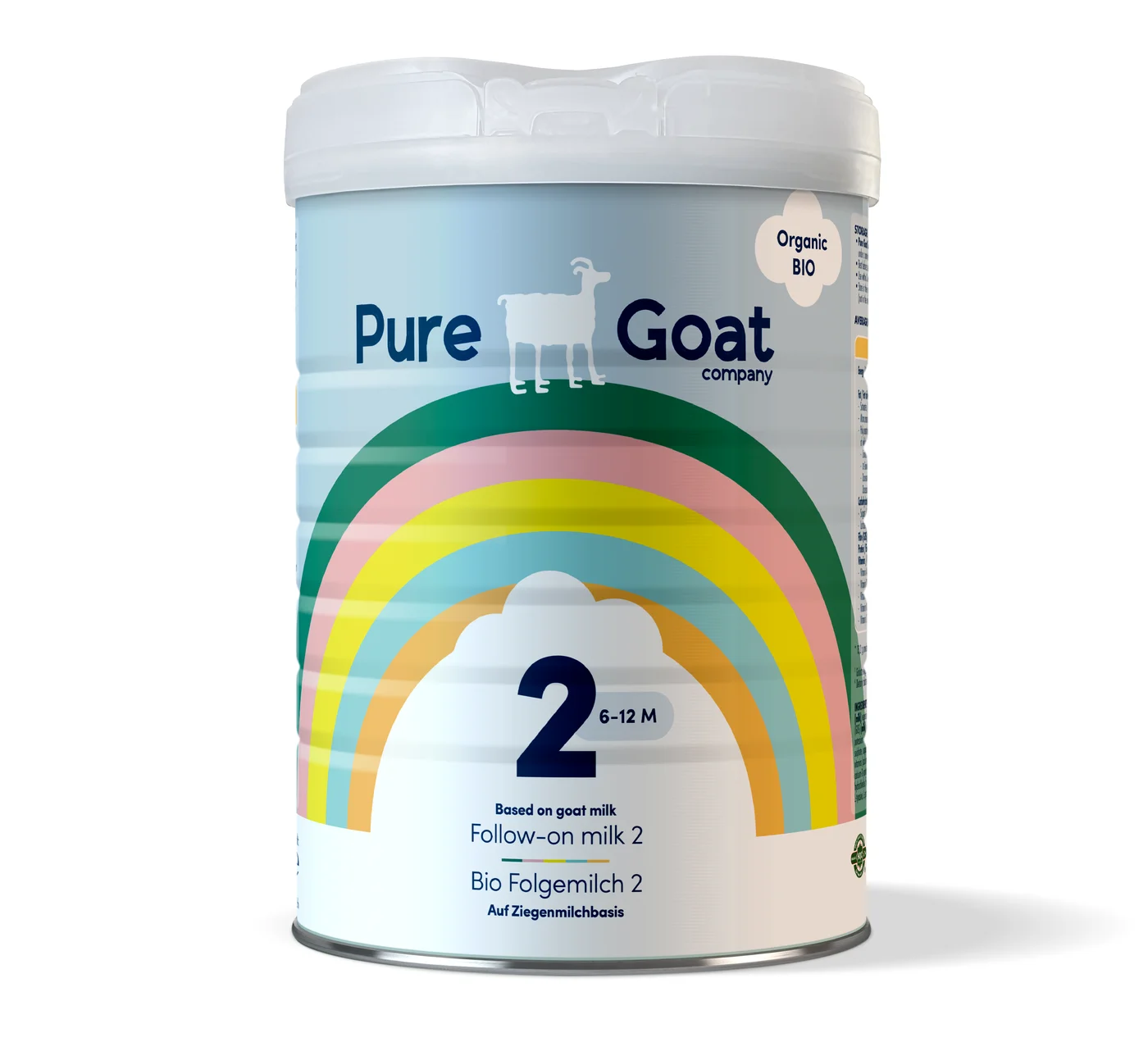
02 · The goat's milk one
Organic Follow-on formula 2
Made with organic whole goat's milk, with DHA from algae and GOS fibres. The brand says it's for use as part of a mixed diet and, as its own pages point out, breastfeeding is the best nutrition for your baby. Talk to your health visitor before changing your baby's milk.
800g tin · Brand says suitable from 6 to 10 months · Follow-on formula 3 (from 10 months) also available
£28 · The Pure Goat Company
Shop the follow-on formulaSafe snacking, NHS style
- Always stay with your baby when they're eating, in case they start to choke.
- Sit them upright, as Pure Goat's own advice says. Need a high chair? See the Graco Presti 3-in-1.
- Know gagging from choking. NHS Best Start in Life says gagging is a normal reflex as babies learn to chew and swallow. Gagging is loud; choking is quiet.
- Skip hard foods such as whole nuts or raw carrots and apples, which the NHS says to avoid to reduce the risk of choking.
- Introduce allergens one at a time. The NHS says foods containing allergens, such as peanuts, hens' eggs, gluten and fish, can be introduced from around 6 months, one at a time and in small amounts, so you can spot any reaction.
For kit that makes mealtimes less chaotic, our round-up of the cheekiest weaning gadgets has ideas, and for quick first meals, see out of this world weaning.
The verdict: coming soon
Our tester is on the case. We'll add our tester family's honest verdict here once the puffs have been crunched, squished and dropped on the floor.
Where to buy
Both are available from The Pure Goat Company's UK site. Prices correct at the time of writing.
Gifted: The Pure Goat Company sent us products to try. As always, our views are our own. This feature is based on information from The Pure Goat Company and the NHS, and isn't medical advice. Talk to your health visitor or GP about your baby's milk, allergies or weaning.
If you’re trying to conceive (TTC), you probably know that there are certain foods and nutrients that become especially important once you’re pregnant. But nutrition plays a vital role even when trying to conceive, much like laying a strong foundation before constructing a house.
Certain nutrients create that foundation by supporting egg and sperm health (yes, nutrition matters for both partners), hormone balance and creating a hospitable environment for a fertilized egg to implant. In fact, studies show that certain nutrients can help increase fertility and improve success rates for both natural conception and fertility treatments.
In other words, nutrition is a key player in the TTC journey, but getting the right nutrients in the right quantities can be tricky. That’s where supplements come in. Just as you’d take a multivitamin to fill in nutritional gaps for optimal health, fertility supplements can give you that extra nutrient boost.
Choosing supplements for your fertility journey
When choosing a supplement to support your fertility journey, look for science-backed, high-quality ingredients. Our editors are careful to select and partner with brands that use ingredients that have been clinically studied to support fertility. Eu Natural® (pronounced you) covers all those bases and more. We love knowing that Eu Natural® products contain zero artificial additives, binders, or fillers and are lab-tested to ensure purity and potency.

When choosing a supplement to support your fertility journey, look for science-backed, high-quality ingredients. Our editors are careful to select and partner with brands that use ingredients that have been clinically studied to support fertility. Eu Natural® (pronounced you) covers all those bases and more. We love knowing that Eu Natural® products contain zero artificial additives, binders, or fillers and are lab-tested to ensure purity and potency.

.png)






.png)
.jpg)
