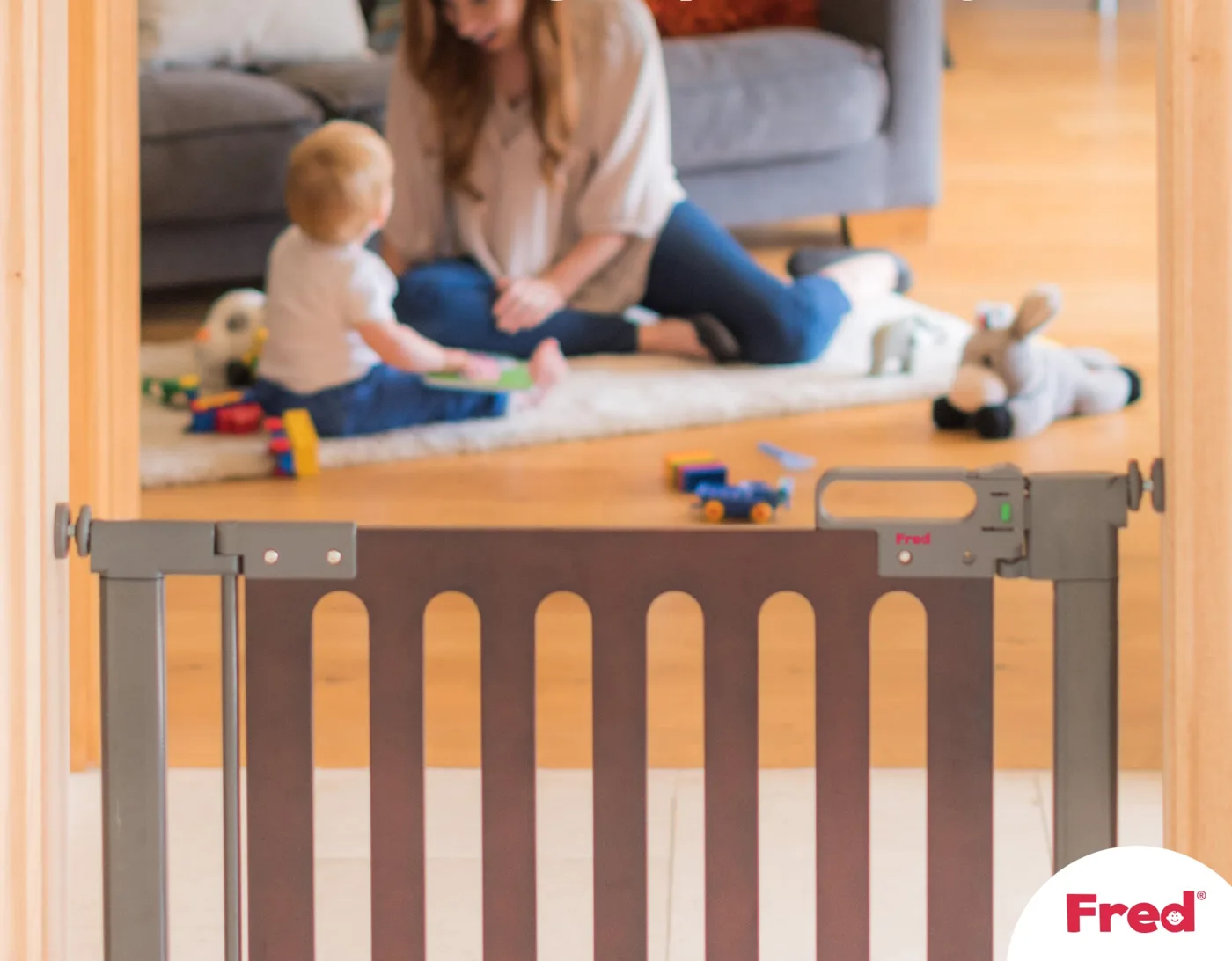
It happens overnight. For months your baby stays roughly where you put them. Then one morning they roll, shuffle or commando-crawl across the room, pull themselves up on the coffee table and look extremely pleased with themselves. The house you thought was perfectly safe suddenly looks like an obstacle course designed by someone who hates you.
Babyproofing is less about the obvious hazards and more about seeing the house the way your baby now does. Fred Safety, the UK home safety brand, puts it neatly: think about what they can now reach, pull, open, climb and grab. Get down on the floor (with a tea, placed well out of reach) and have a look around. It is surprisingly educational.
Where could they fall?
Stairs are the big one. The NHS advice on baby and toddler safety is to fit safety gates that meet British Standard BS EN 1930:2011, and to keep using them at the top and bottom of the stairs until your child is at least two. It also suggests holding the handrail whenever you carry your baby up or down, in case you trip.
Screw-fit or pressure-fit? Screw-fit gates are fixed into the wall and have no bar along the bottom, which is why they are the type to use at the top of the stairs. Pressure-fit gates are held in place without drilling, so they are handy for doorways and the bottom of the stairs. Fred Safety is clear about two rules for pressure-fit gates: they have a bar across the bottom that can be a trip hazard, so they should never go at the top of the stairs, and they should not be used on glass banisters, where they can easily slip.
What can they pull over?
Once babies can pull themselves up, every chest of drawers becomes a climbing frame and every bookcase looks like a ladder. Heavy furniture that is not fixed to the wall can tip. Anti-tip straps anchor the top of the unit to the wall, and the NHS also suggests keeping low furniture away from windows and fitting windows with locks or safety catches, because a sofa under a window is basically an invitation.
What can they reach (and burn)?
If they can reach it, they will grab it, lick it or post it into the DVD player. The NHS points out that a hot drink can still scald 15 minutes after it was made, so put your cup down well out of reach before you pick your baby up. In the kitchen, cook on the back rings where you can, turn pan handles towards the back of the hob, and use a cordless kettle or one with a short or curly flex so it cannot dangle over the edge.
Small things matter too. Buttons, coins and the tiny parts from older siblings' toys all need to live out of reach, as small objects are a choking risk for babies and toddlers.
What could trap little fingers?
Doors, drawers and cupboards are endlessly fascinating, right up until something slams. The NHS mentions devices that stop doors from closing fully so fingers do not get trapped. Cupboard locks and drawer catches keep the cleaning products and the good biscuits where they belong.
Babyproofing is not a weekend job. It is a subscription, renewed every time they learn something new.
It's never quite finished
The trickiest part is that your baby will not stay the same size for long. Crawling becomes cruising, cruising becomes climbing, and what was out of reach in September is fair game by Christmas. Do a quick floor-level check every few weeks and adjust as you go. Our guide to preventing the most common baby accidents is a good companion read, along with first aid: what you need to know, because no amount of gates replaces knowing what to do if something does happen.
Our picks from the Fred Safety range
Five pieces that cover the hazards above, from a starter kit for the little things to gates for the stairs. Details come from Fred Safety.
01 · Start here
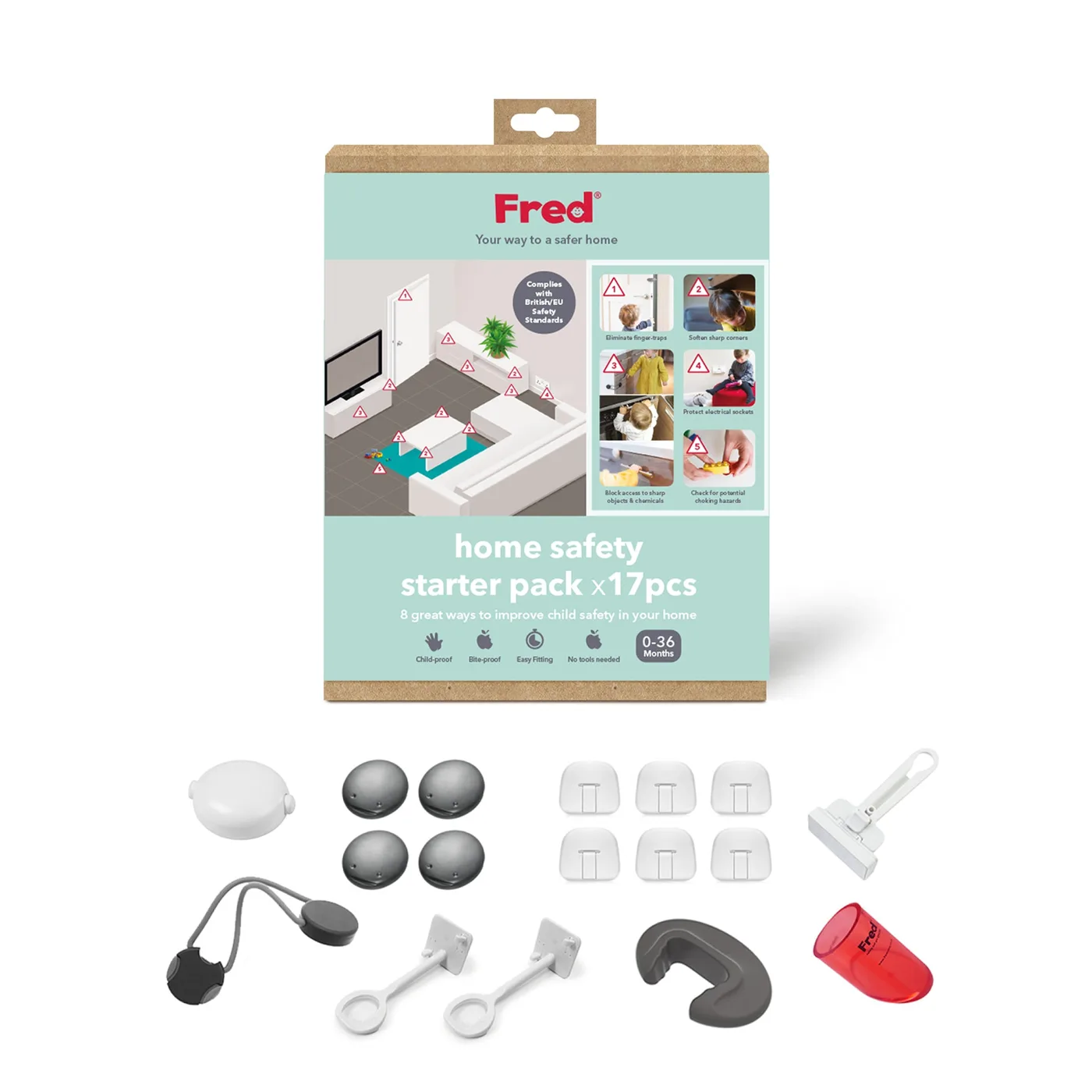
Home Safety Starter Pack (17 pieces)
A sensible first buy if you don't know where to begin. It brings together corner protectors, drawer catches, a door slam stopper and a multi-purpose block in one box, plus a safety-check tool that shows you which small objects are a choking hazard.
17 pieces · Mixed safety accessories · Includes a small-parts checker
£19.99 · Fred Safety
Shop the starter pack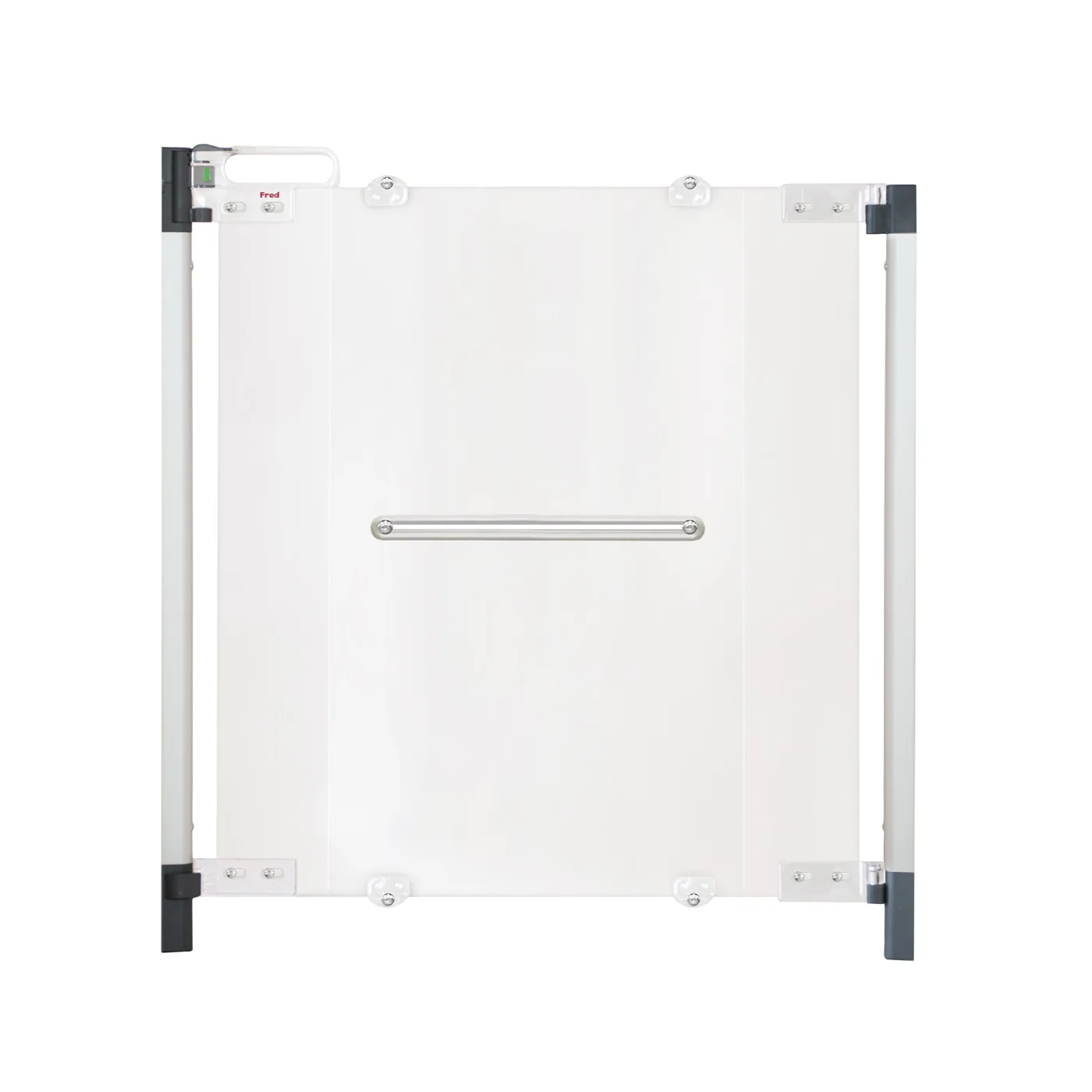
02 · For the top of the stairs
Screw Fit Clear-View Stairgate
A clear acrylic panel that keeps the view (and the light) open, so the hallway does not look like a holding pen. Because it screws into the wall and has no bar along the bottom, it is a no-trip design suitable for the top of the stairs, and it fits inside or outside an opening.
Clear acrylic blend · Screw fit · No bottom bar · Suitable for the top of the stairs
£140 · Fred Safety
Shop the clear-view gate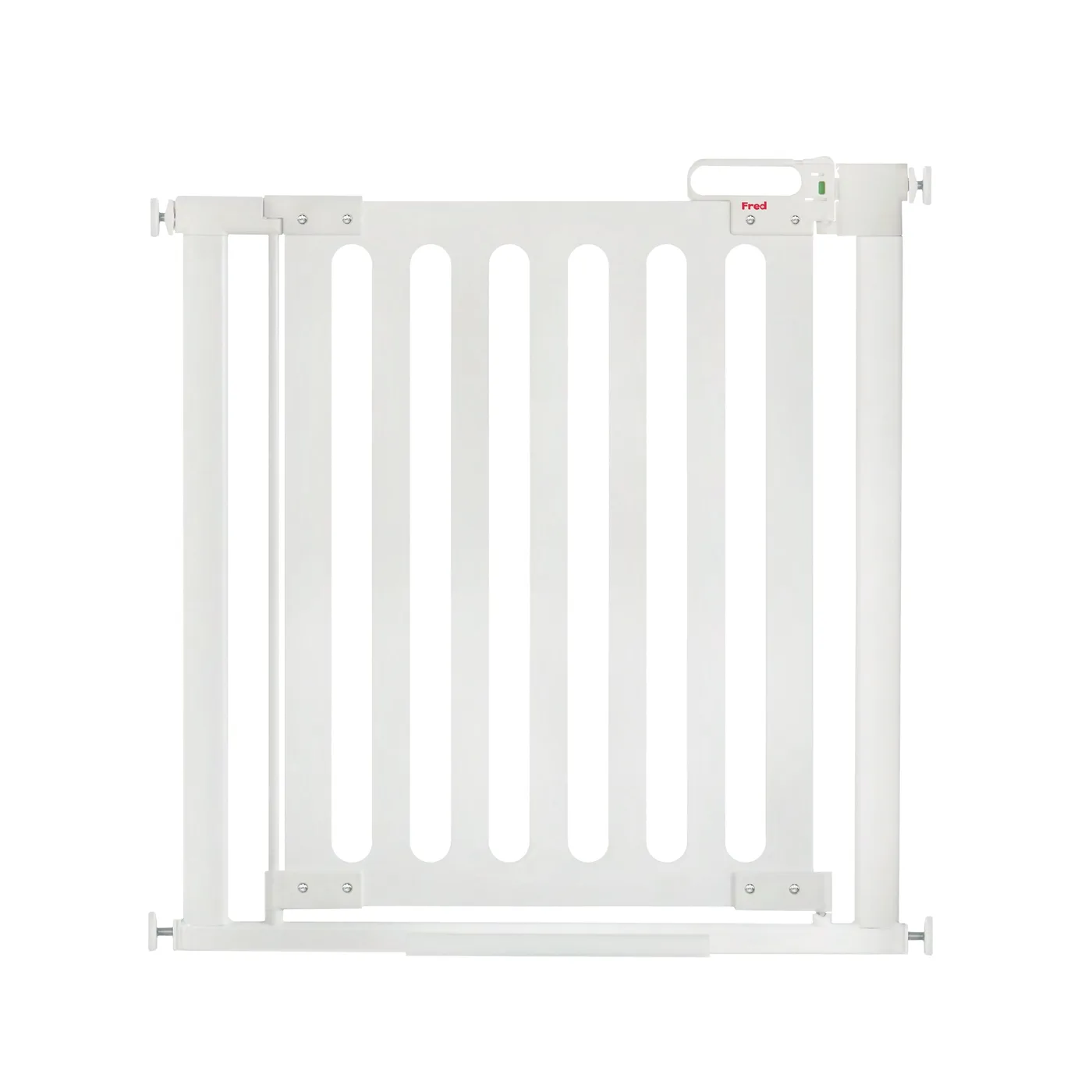
03 · For doorways and the bottom of the stairs
Pressure Fit Wooden Stairgate
Carved from a single piece of poplar with discreet fittings, so it looks more like part of the house than an emergency measure. No drilling needed, which makes it a good fit for doorways and the bottom of the stairs. Never at the top of the stairs, and not on glass banisters.
Pure White · Poplar wood · Pressure fit · Bottom of stairs and doorways only
£80 · Fred Safety
Shop the wooden gate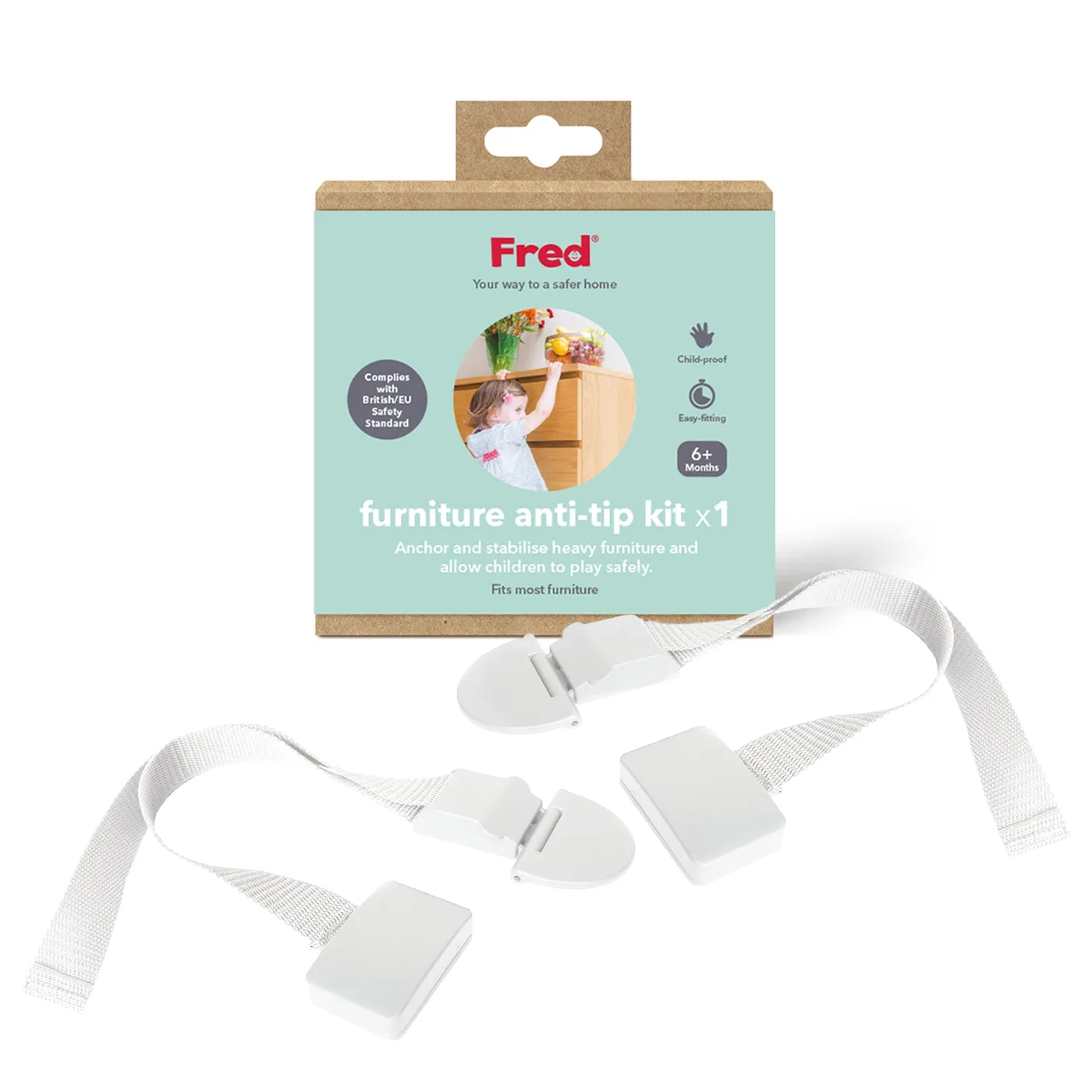
04 · For the climbers
Furniture Anti-Tip Kit
Straps the top of drawers, shelves and cabinets to the wall to stop them tipping. It uses Fred's SecureHold adhesive on the furniture (or screws, if you prefer) and the wall end is screwed in. The strap loosens for cleaning, buckle covers stop little fingers fiddling, and the brand says it is tested to withstand up to 65kg.
Pure White · Adhesive or screw fit to furniture · Screw fit to wall
£9.99 · Fred Safety
Shop the anti-tip kit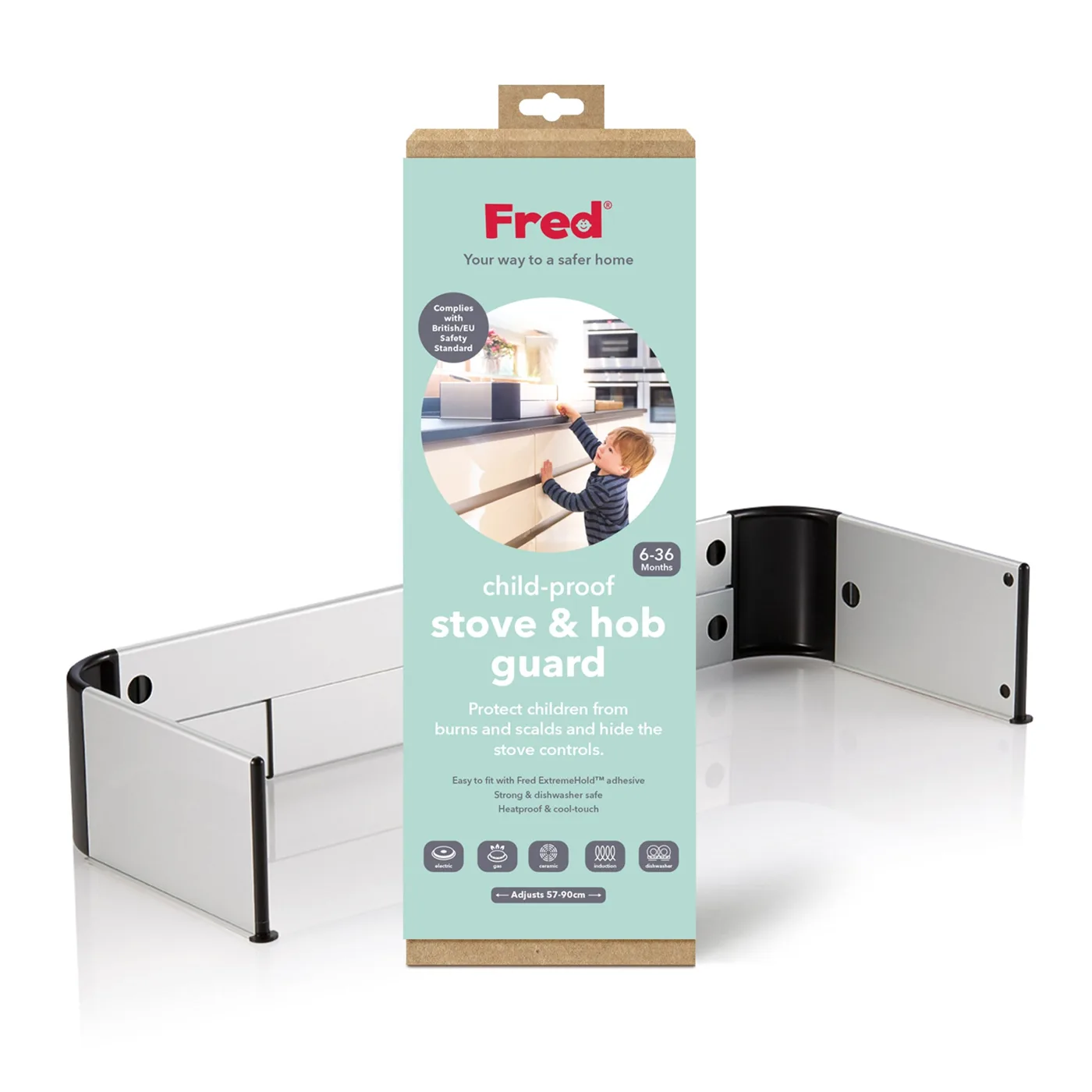
05 · For the kitchen
Stove & Hob Guard
A guard that sits around the hob, keeping small hands away from pans, hot surfaces and the controls while you carry on cooking. Designed for open-plan kitchens and suitable for electric, gas, ceramic and induction hobs. Still cook on the back rings and turn the handles in.
Aluminium and black · Fits electric, gas, ceramic and induction hobs · Ages 6 to 36 months
£50 · Fred Safety
Shop the hob guardPrices correct at the time of writing and may change. Product details come from Fred Safety; safety advice is from the NHS. Always follow the manufacturer's fitting instructions, check gates meet BS EN 1930:2011, and never use a pressure-fit gate at the top of the stairs or on glass banisters. This article is general information, not a substitute for professional advice.
If you’re trying to conceive (TTC), you probably know that there are certain foods and nutrients that become especially important once you’re pregnant. But nutrition plays a vital role even when trying to conceive, much like laying a strong foundation before constructing a house.
Certain nutrients create that foundation by supporting egg and sperm health (yes, nutrition matters for both partners), hormone balance and creating a hospitable environment for a fertilized egg to implant. In fact, studies show that certain nutrients can help increase fertility and improve success rates for both natural conception and fertility treatments.
In other words, nutrition is a key player in the TTC journey, but getting the right nutrients in the right quantities can be tricky. That’s where supplements come in. Just as you’d take a multivitamin to fill in nutritional gaps for optimal health, fertility supplements can give you that extra nutrient boost.
Choosing supplements for your fertility journey
When choosing a supplement to support your fertility journey, look for science-backed, high-quality ingredients. Our editors are careful to select and partner with brands that use ingredients that have been clinically studied to support fertility. Eu Natural® (pronounced you) covers all those bases and more. We love knowing that Eu Natural® products contain zero artificial additives, binders, or fillers and are lab-tested to ensure purity and potency.

When choosing a supplement to support your fertility journey, look for science-backed, high-quality ingredients. Our editors are careful to select and partner with brands that use ingredients that have been clinically studied to support fertility. Eu Natural® (pronounced you) covers all those bases and more. We love knowing that Eu Natural® products contain zero artificial additives, binders, or fillers and are lab-tested to ensure purity and potency.