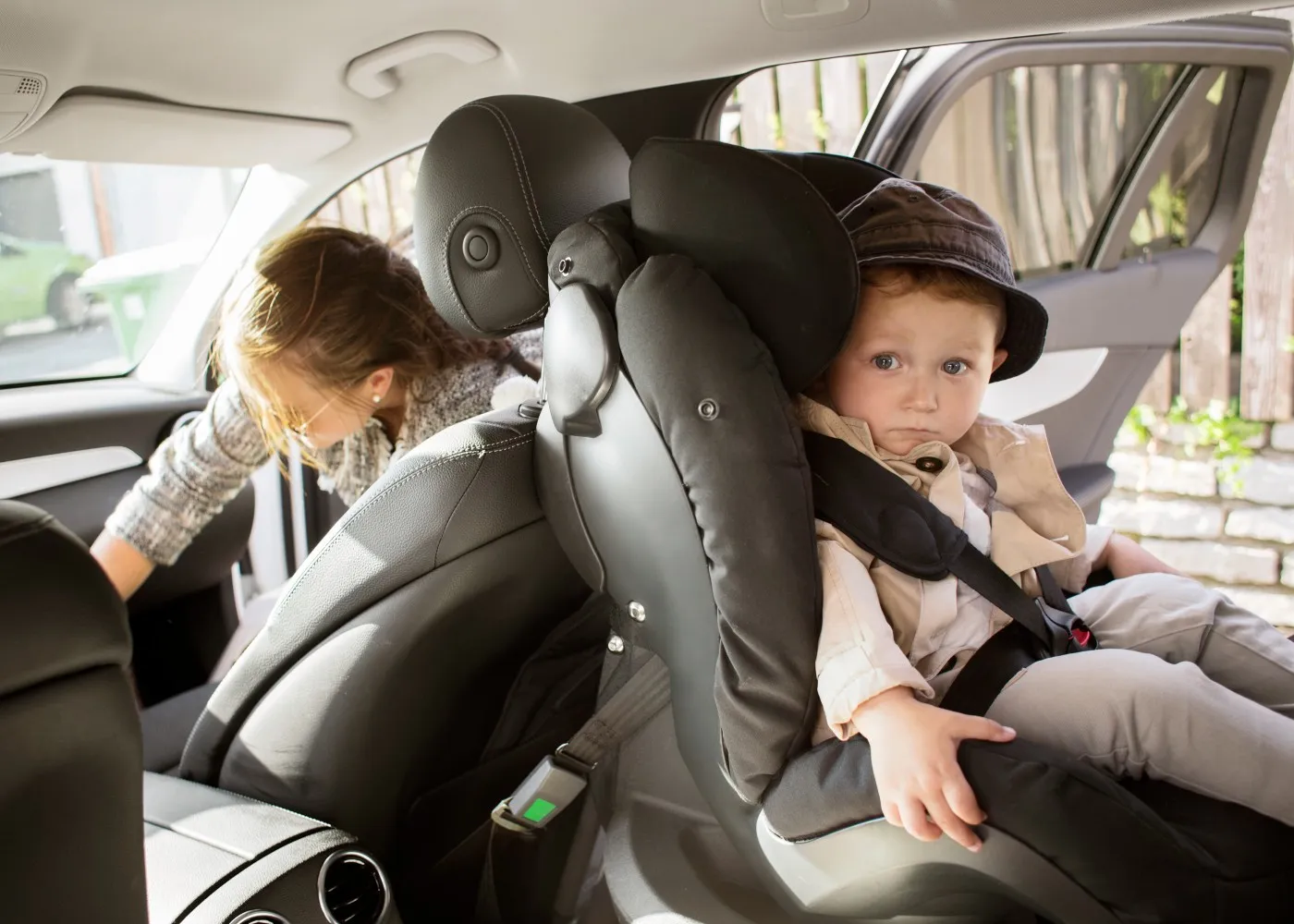
UK Parents are also behind the Rear Face for Safety campaign and one in particular is coming to it from personal experience. Jenny Everson was involved in a collision in Sheffield in 2023 when a speeding driver crossed the central reservation and hit her car head-on. Jenny and her front seat passenger were both severely injured, however, her son Milo, who was in a rear-facing safety seat in the back of the car, suffered only very mild injuries.
As she says, "Had it not been for Marlo's rear-facing seat, I was told by emergency services he likely wouldn't be here now. Since the crash in 2023, I have been very passionate about raising awareness about the importance of rear-facing seats and if telling our story helps save just one child's life, then it's worth it."
The support for Rear Face for Safety is right across the board
Leading UK transport safety experts are also supporting the Rear Face for Safety campaign, along with prominent charities like CAPT (Child Accident Prevention Trust) and RoSPA (Royal Society for the Prevention of Accidents), as well as MPs, Police and Crime Commissioners, the AA Charitable Trust and many more.
Sweden's successful Vision Zero evidence supports Rear Face for Safety
Then there’s the Swedish connection, which might seem left-field until you learn a bit more about the country’s Vision Zero approach to road safety introduced in 1997. Instead of trying to prevent all traffic accidents – the focus of most road safety initiatives worldwide – Vision Zero’s goal was for no one to die or be seriously injured in road accidents.
This move towards emphasising on-board safety over on-road legislation wasn’t just revolutionary, it was effective, more than halving Sweden’s road deaths in almost 30 years, giving it one of the lowest child road casualty rates in the world.
83% of children between two and four travel rear-facing in Sweden
Part of Vision Zero's success could be down to the increased use of rear-facing safety seats for children until at least the age of four, something that's born out in a recent report by Swedish insurers, Folksam.
Based on an analysis of child accident fatalities between 1992 and 2024, the Folksam report concludes that up to 48% of children aged from birth to three years may have survived collisions had they been travelling rear-facing.
Currently 83% of children aged two to four travel rear facing in Sweden, compared to 22% in the UK. What’s even more interesting about this, is that the laws are almost identical in the UK and Sweden - children of up to 15 months and under 76cm tall must be in rear-facing car seats - so although there is no legal requirement, Swedish parents choose rear-facing seats based on safety evidence.
As Dr Maria Klingegård, Traffic Safety Researcher and co-author of the Folksam study says, “Sweden has among the lowest fatality rates for small children in cars, largely because most parents use rear-facing restraints for older children up to four or five years of age, or longer. It is the responsibility of every parent to make sure children travel as safely as possible, and that means using rear-facing restraints.”
The UK Government aims to reduce road deaths and serious injuries by 65% in the next 10 years
The launch of the Rear Face for Safety campaign this June, follows on from the UK Government Road Safety Strategy released in early 2026 with the ambitious target of a 65% overall reduction in road deaths and serious injuries by 2035 and a 70% reduction in deaths and serious injuries in under 16s within the same timeframe.
Finally, back to Jenny Everson. Her decision to keep Milo in a rear-facing seat past the legal requirement was based on her own research, and part of the reason she’s such a strong advocate for the Rear Face for Safety campaign is its drive to raise awareness without putting the responsibility of fact-finding on to parents. “I will be forever grateful I did my research as I'm sure Milo’s seat saved his life, or at the very least saved him from serious injury. But parents shouldn’t have to carry out extensive research themselves to understand what is safest for their child.”
Show your support by visiting Rear Face for Safety and signing up to the campaign
If you’re trying to conceive (TTC), you probably know that there are certain foods and nutrients that become especially important once you’re pregnant. But nutrition plays a vital role even when trying to conceive, much like laying a strong foundation before constructing a house.
Certain nutrients create that foundation by supporting egg and sperm health (yes, nutrition matters for both partners), hormone balance and creating a hospitable environment for a fertilized egg to implant. In fact, studies show that certain nutrients can help increase fertility and improve success rates for both natural conception and fertility treatments.
In other words, nutrition is a key player in the TTC journey, but getting the right nutrients in the right quantities can be tricky. That’s where supplements come in. Just as you’d take a multivitamin to fill in nutritional gaps for optimal health, fertility supplements can give you that extra nutrient boost.
Choosing supplements for your fertility journey
When choosing a supplement to support your fertility journey, look for science-backed, high-quality ingredients. Our editors are careful to select and partner with brands that use ingredients that have been clinically studied to support fertility. Eu Natural® (pronounced you) covers all those bases and more. We love knowing that Eu Natural® products contain zero artificial additives, binders, or fillers and are lab-tested to ensure purity and potency.

When choosing a supplement to support your fertility journey, look for science-backed, high-quality ingredients. Our editors are careful to select and partner with brands that use ingredients that have been clinically studied to support fertility. Eu Natural® (pronounced you) covers all those bases and more. We love knowing that Eu Natural® products contain zero artificial additives, binders, or fillers and are lab-tested to ensure purity and potency.