.webp)
The womb matters. Genetics matter. Nutrition, pregnancy health, emotional wellbeing and early development all matter too. But no single factor decides who your child will become.
As Kimberley Wilson, a Chartered Psychologist with a master’s degree in nutrition and author of How to Build a Healthy Brain, often frames brain health, the mind and body are deeply connected — and nutrition, lifestyle and psychology all play a role in supporting healthy brain function.
So, rather than seeing pregnancy as a time when you must “maximise” your baby’s IQ, it may be more helpful — and much kinder — to see it as the beginning of a long, unfolding story of brain development.
What is IQ?
IQ stands for intelligence quotient. It is a score from standardised psychological tests designed to measure certain cognitive abilities, such as reasoning, problem-solving, memory and learning.
But IQ is not the same as a child’s worth, potential or future happiness. It does not measure everything that matters. It does not measure kindness, imagination, confidence, empathy, humour, creativity, emotional intelligence or resilience. It also cannot tell you who your baby will become, what they will love, or the many ways they may shine.
.webp)
So, is IQ determined in the womb?
Not completely. A baby’s brain begins developing before birth, and the foundations for later learning, movement, senses and emotional development start to form during pregnancy. Harvard’s Center on the Developing Child explains that brain architecture begins to form before birth and continues developing into adulthood, shaped by both early experiences and biology.
Genes provide part of the blueprint. Research in Nature Reviews Genetics describes intelligence as highly heritable, while also showing that many genetic variants are involved, each usually contributing a small effect.
In simple terms: there is no single “IQ gene”, and there is no simple pregnancy formula that determines a child’s intelligence. Your baby arrives with their own genetic starting point, but brain development continues through pregnancy, babyhood, childhood and beyond. The environment around them — including relationships, nutrition, sleep, play, learning and emotional safety — continues to shape development long after birth.
What happens to the baby’s brain in the womb?
The brain and nervous system begin developing very early in pregnancy. Over time, brain cells grow, move into place and begin forming connections. The foundations for the senses, movement, sleep-wake rhythms and later learning are gradually laid down.
This is why pregnancy is often described as an important window for development. But it is not a window that closes forever at birth. Harvard’s work on brain architecture describes development as a process built over time, with genes providing the blueprint and experiences influencing how brain circuits are strengthened. That idea is reassuring. It means your baby’s brain is not “finished” in the womb. It remains beautifully adaptable.
Kimberley Wilson’s perspective: brain health starts with the whole body
Kimberley Wilson’s work is especially useful here because she brings together psychology, nutrition and brain health. Her official biography describes her as a Chartered Psychologist with a master’s degree in nutrition, and her “Whole Body Mental Health” approach integrates evidence-based nutrition and lifestyle factors with psychological therapy, with an emphasis on nutrition and the brain.
For pregnant parents, this does not mean trying to create the “perfect” baby brain. It means understanding that the developing brain is part of the whole body.
Food, rest, stress, support, physical health, emotional wellbeing and relationships are all part of the wider picture. That can sound like a lot, but it is not about perfection. It is about gentle, realistic support.
What can influence brain development during pregnancy?
1. Genetics: your baby’s starting blueprint
Your baby inherits a unique mix of genes. These influence many aspects of development, including temperament, learning style and cognitive ability. But genes are not destiny.
Harvard explains that genes provide the basic blueprint for brain circuits, while experiences and repeated use help strengthen the circuits used most often.
So, while genetics play an important role in intelligence, they are only one part of the story.
.webp)
2. Nutrition: feeding a growing brain
Pregnancy nutrition supports your baby’s developing body and brain. Key nutrients often discussed in relation to fetal brain development include folate, iodine, iron, vitamin D, choline and omega-3 fatty acids such as DHA.
Kimberley Wilson has written about the importance of nutrition across the lifespan, including from conception, and highlights nutrients such as folic acid and omega-3 fats as important for the developing brain. In her BBC Science Focus article on brain food, she notes that DHA is part of brain cell membranes and accumulates in the brain and retina during pregnancy.
Iodine is another important nutrient in pregnancy. The World Health Organization explains that iodine is essential for producing maternal and fetal thyroid hormones, which regulate development of the fetal brain and nervous system.
In the UK, the NHS recommends folic acid before and during early pregnancy to help reduce the risk of neural tube defects, and vitamin D during pregnancy.
This does not mean you need a perfect diet. Many pregnant women experience nausea, food aversions, tiredness or worry around food. A realistic aim is nourishment, not perfection.
3. Omega-3, fish and pregnancy
Oily fish can be a helpful source of omega-3 fats, including DHA, which is important for brain and eye development. Kimberley Wilson has written that omega-3 fats are important for healthy brain structure and function, and that they must come from the diet because the body cannot make enough on its own.
There is also a balance to consider around mercury. The FDA and EPA advise people who are pregnant, might become pregnant or are breastfeeding to make informed choices about fish, choosing options that are nutritious and lower in mercury.
In the UK, it is best to follow NHS pregnancy food guidance or ask your midwife if you are unsure which fish are recommended or best avoided.
4. Alcohol, smoking and substances
Some exposures can affect fetal brain development. Alcohol is one of the clearest examples. The NHS explains that fetal alcohol spectrum disorder can cause a range of mental and physical problems if a baby is exposed to alcohol during pregnancy. A gentle note: many people drink alcohol before they know they are pregnant. If this has happened to you, try not to panic or punish yourself. Stop once you know, and speak to your midwife or GP for personalised support.
The aim of this information is not to frighten parents. It is to help you make supported choices from where you are now.
5. Stress and emotional wellbeing
Pregnancy can be emotionally intense. You may feel excited, anxious, exhausted, grateful, overwhelmed — sometimes all in the same afternoon.
It is important to say clearly: ordinary stress does not mean you have harmed your baby.
Stress research is complex, and child development is influenced by many different factors. What matters is that you are supported. If you are feeling persistently anxious, low, panicky or unable to cope, that is not a personal failure. It is a sign you deserve care.
Kimberley Wilson’s broader work is helpful here because it resists separating mental health from physical health. Her approach recognises that psychological wellbeing, nutrition and lifestyle can all be part of supporting brain health.
Pregnancy mental health support is not a luxury. It is part of looking after both you and your baby.
6. Early life after birth
One of the most reassuring things to know is that brain development continues after birth.
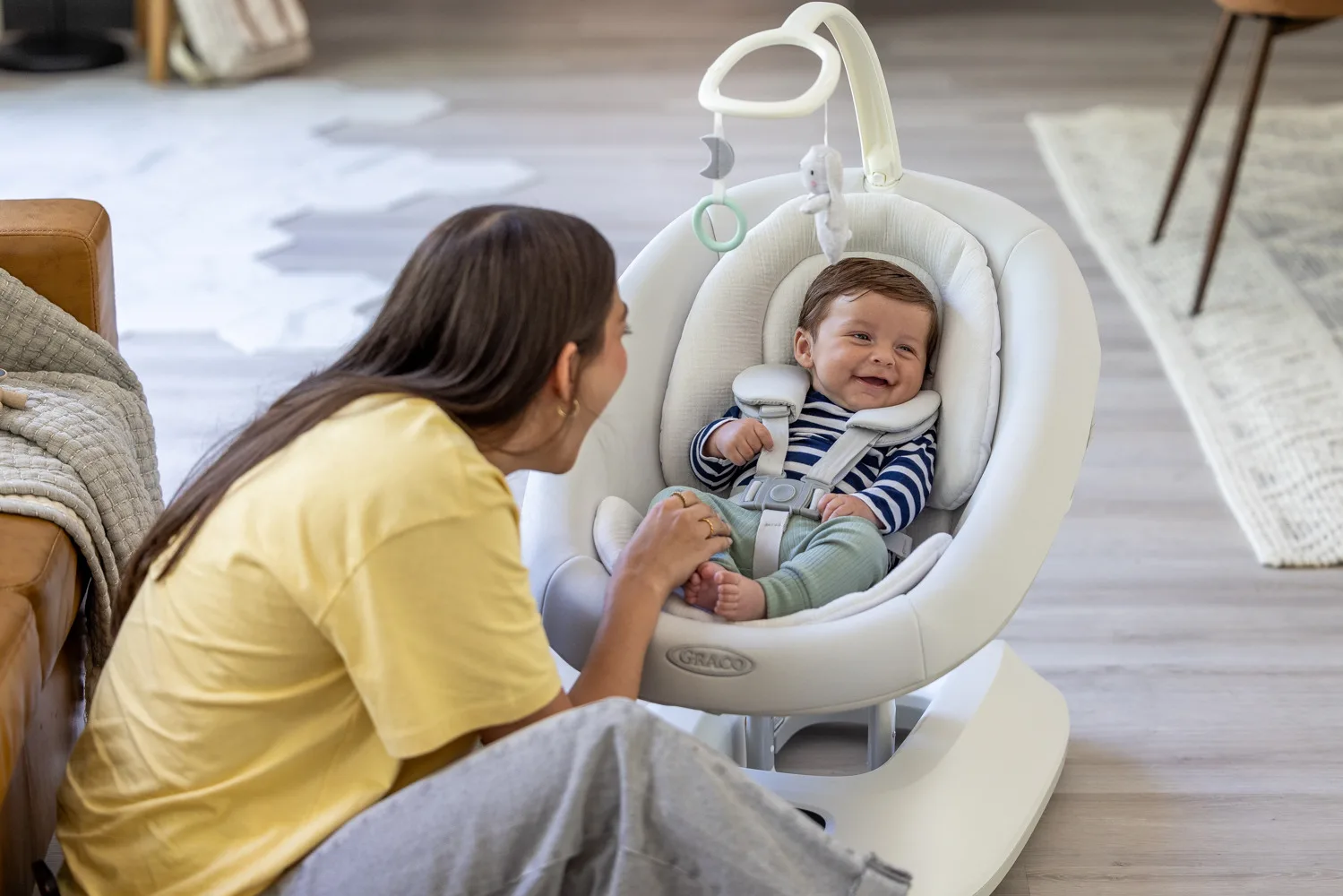
Your baby’s brain keeps growing through everyday moments: being held, fed, comforted, spoken to, smiled at, read to and responded to. Harvard highlights the importance of “serve and return” interactions — the back-and-forth moments between babies and caregivers that help shape brain architecture.
This means you do not need flashcards for a newborn. You do not need expensive toys or a strict development routine.
Your voice, your face, your comfort, your response — these are powerful.
Can you boost your baby’s IQ during pregnancy?
It is best to be careful with the idea of “boosting IQ”. No supplement, playlist, app, food or routine can guarantee a higher IQ. And pregnancy should not feel like another performance test for parents.
What you can do is support healthy development by focusing on the basics:
Eat as well as you realistically can.
Take pregnancy supplements recommended by your midwife, GP or healthcare provider.
Attend antenatal appointments.
Avoid alcohol and smoking where possible, and ask for support if stopping is difficult.
Speak to a professional before starting or stopping medication.
Rest when you can.
Ask for help with anxiety, low mood or stress.
After birth, respond to your baby with warmth, comfort and connection. These simple things may not sound dramatic, but they are the foundations babies need.
.webp)
A gentle reassurance for parents
If you are pregnant and worrying about your baby’s intelligence, take a breath. Your baby does not need a perfect pregnancy. They need care, nourishment, protection where possible and loving support over time.
IQ is not fully determined in the womb. The womb helps lay foundations, but your child’s brain continues to develop through infancy, childhood and beyond. They will be shaped by genes, yes — but also by cuddles, stories, sleep, food, play, safe relationships, curiosity, school, friendships, encouragement and love.
And most importantly, your baby is more than a future test score. They are a whole person, already becoming themselves.
Who is Kimberley Wilson?
Kimberley Wilson is a Chartered Psychologist with a master’s degree in nutrition. She is the author of How to Build a Healthy Brain and Unprocessed, and her work focuses on the links between psychology, nutrition, lifestyle and brain health. This article draws on the work of Kimberley Wilson
If you’re trying to conceive (TTC), you probably know that there are certain foods and nutrients that become especially important once you’re pregnant. But nutrition plays a vital role even when trying to conceive, much like laying a strong foundation before constructing a house.
Certain nutrients create that foundation by supporting egg and sperm health (yes, nutrition matters for both partners), hormone balance and creating a hospitable environment for a fertilized egg to implant. In fact, studies show that certain nutrients can help increase fertility and improve success rates for both natural conception and fertility treatments.
In other words, nutrition is a key player in the TTC journey, but getting the right nutrients in the right quantities can be tricky. That’s where supplements come in. Just as you’d take a multivitamin to fill in nutritional gaps for optimal health, fertility supplements can give you that extra nutrient boost.
Choosing supplements for your fertility journey
When choosing a supplement to support your fertility journey, look for science-backed, high-quality ingredients. Our editors are careful to select and partner with brands that use ingredients that have been clinically studied to support fertility. Eu Natural® (pronounced you) covers all those bases and more. We love knowing that Eu Natural® products contain zero artificial additives, binders, or fillers and are lab-tested to ensure purity and potency.

When choosing a supplement to support your fertility journey, look for science-backed, high-quality ingredients. Our editors are careful to select and partner with brands that use ingredients that have been clinically studied to support fertility. Eu Natural® (pronounced you) covers all those bases and more. We love knowing that Eu Natural® products contain zero artificial additives, binders, or fillers and are lab-tested to ensure purity and potency.






.webp)